
New Port Richey · 1851–1927
When Hollywood Came to New Port Richey— Before the Air Conditioning Did
The strange Florida moment when movie stars, steam heat, and refrigerated air all showed up at once.
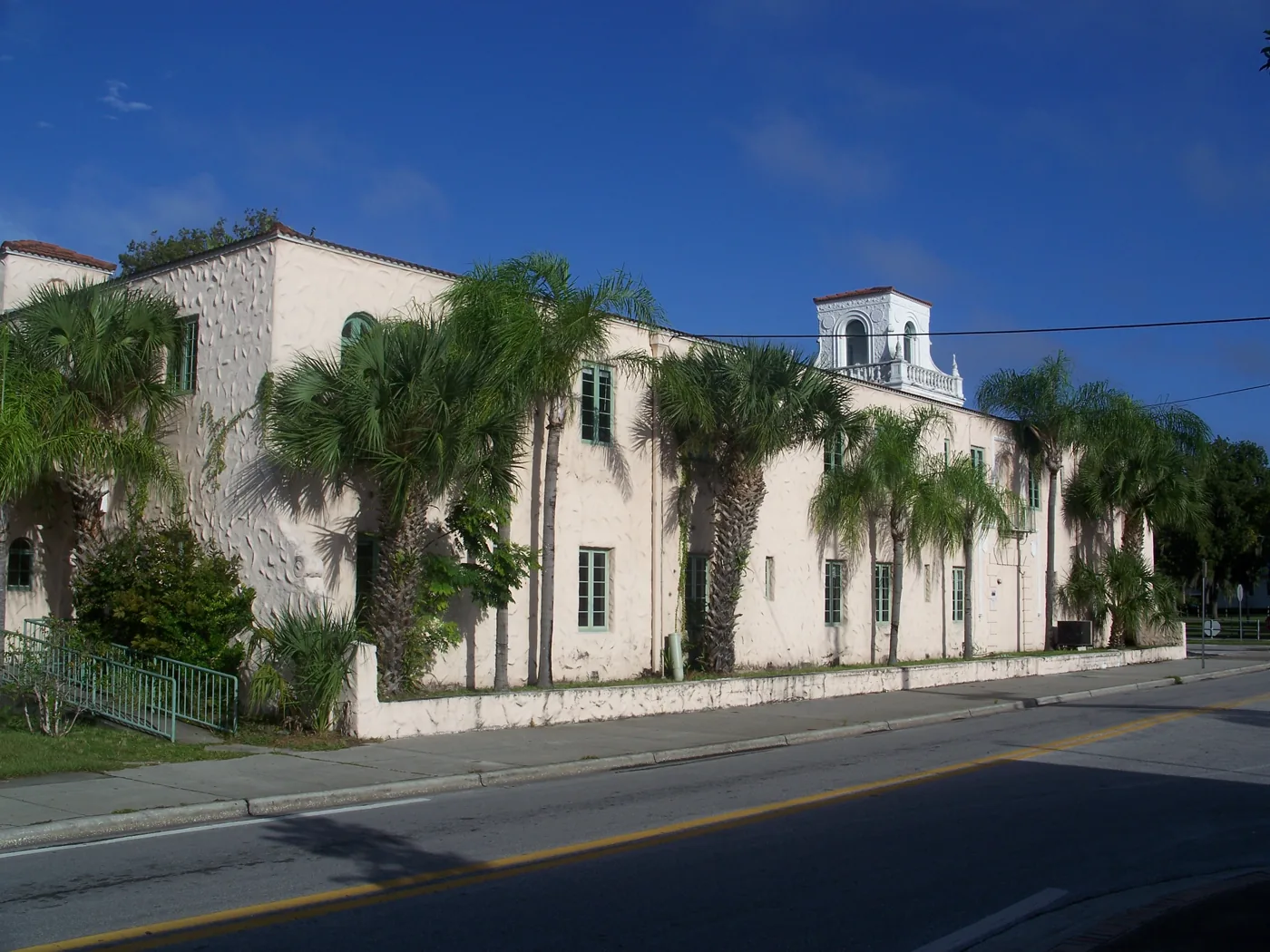
In 1926, New Port Richey was trying to become the Hollywood of the East. Movie stars were buying property, a grand theater was opening downtown, and an elegant Spanish hotel was going up for the crowd the town was sure would follow.
At almost the same moment, people just down the Gulf Coast were lining up for something most Floridians had never felt in their lives: refrigerated air.
Those two things — Hollywood glamour and cold air on a hot day — arrived in this corner of Florida at nearly the same time. They just didn't arrive in the same town.
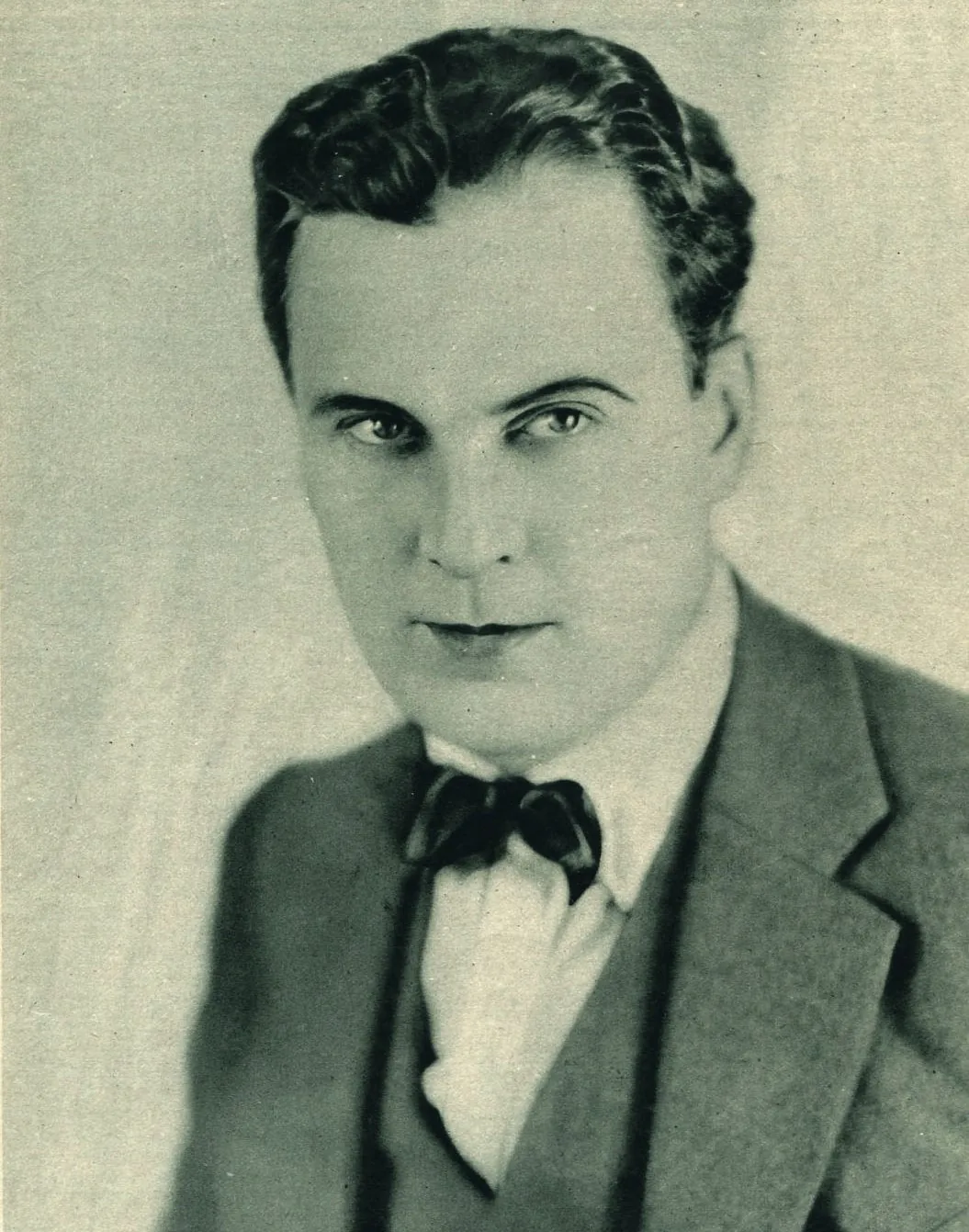
Thomas Meighan — 1922
Thomas Meighan, Strauss-Peyton Studio, Picture-Play Magazine, 1922. Wikimedia Commons (public domain).
A movie town with no way to cool itself
The star at the center of it was Thomas Meighan, one of the biggest names of the silent era. He liked New Port Richey enough that the town began calling itself his Florida home, and it started dreaming much bigger than its size.
Here's the part that's easy to forget. All of this glamour was happening before air conditioning was a normal thing to have. A summer afternoon here was exactly as hot as it is now — you just had no switch to flip.
Which raises a fair question: how does a town this hot end up chasing Hollywood before it can even cool a room?
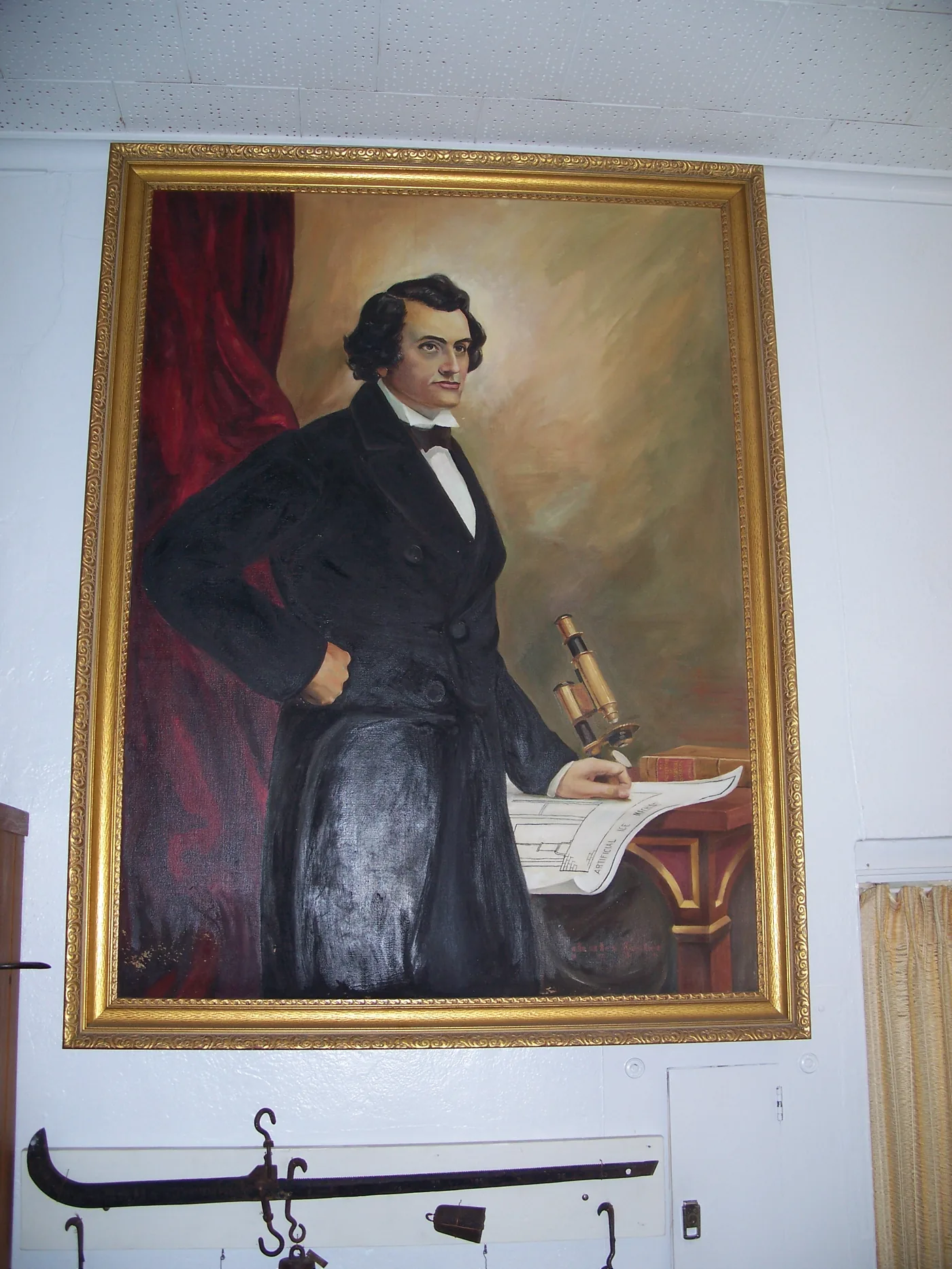
Dr. Gorrie — Apalachicola
Portrait of Dr. John Gorrie, John Gorrie Museum. Photo: Ebyabe / Wikimedia Commons (CC BY-SA 3.0).
The Florida doctor who tried to cool a sickroom
To answer that, you have to go back — well before the movie stars — to a doctor in Apalachicola named John Gorrie.
In the 1840s, Gorrie was treating patients burning up with yellow fever, and he became convinced that cooler air would help them. So he built a machine to make it.
What he actually built was closer to an ice maker than an air conditioner. It compressed and expanded air to chill water into ice, and he used that ice to cool the rooms of the sick.
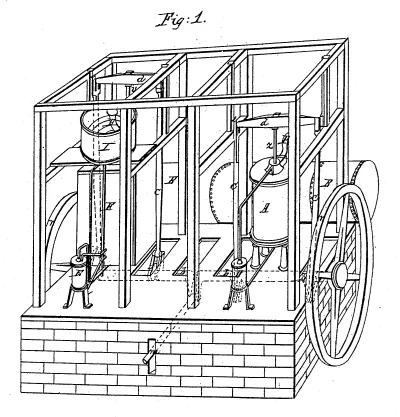
His ice machine — patented 1851
Model of John Gorrie's ice machine. Wikimedia Commons (public domain).
He received a U.S. patent for mechanical refrigeration in 1851 — a Florida doctor, decades ahead of everyone, holding a patent for making cold on purpose.
And then almost nothing happened. The idea was too early, the money wasn't there, and Gorrie died a few years later without seeing it catch on. Florida would stay hot and un-air-conditioned for another two generations.
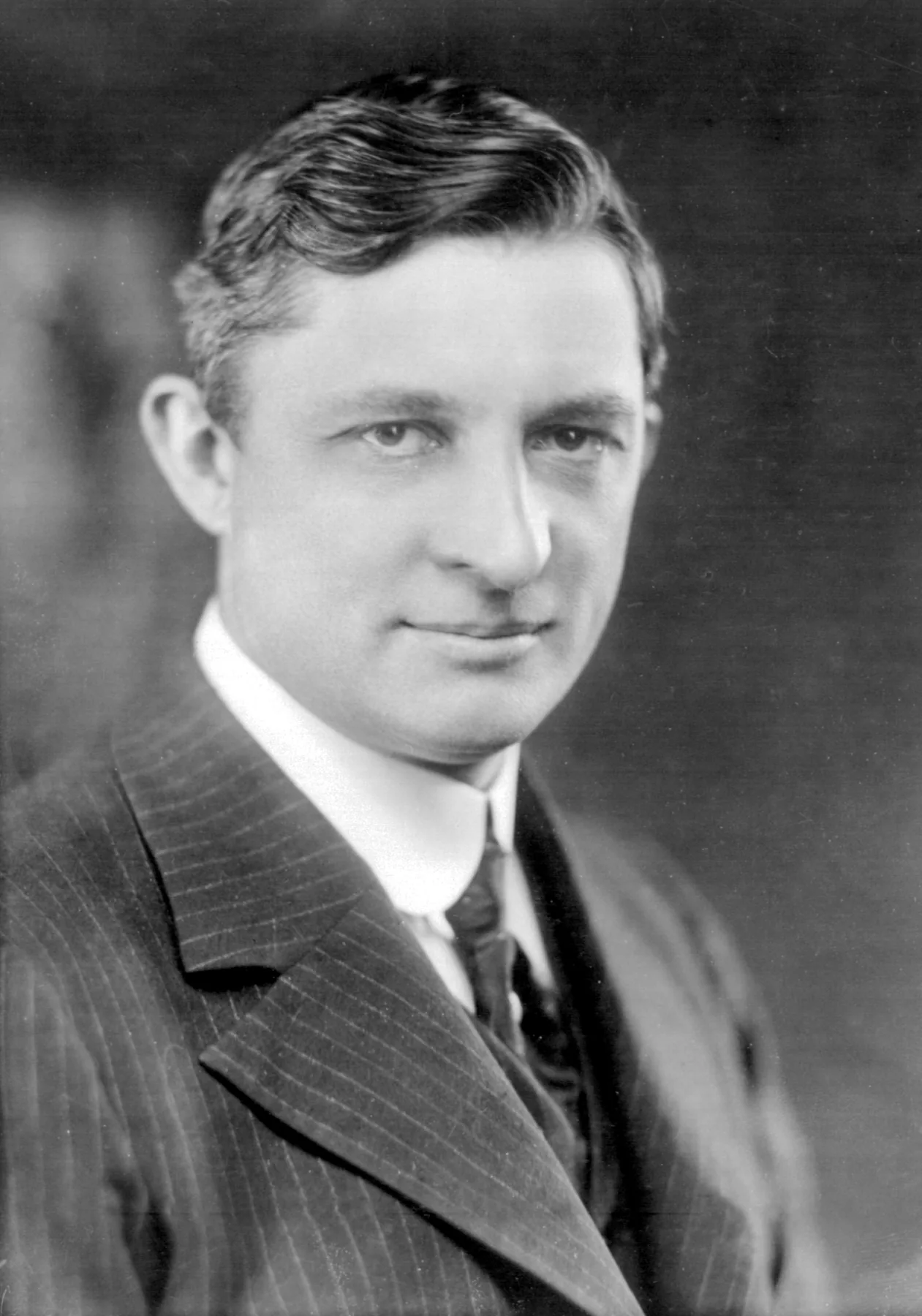
Willis Carrier — 1915
Willis Carrier, 1915. Carrier company history / Wikimedia Commons (public domain).
Cold air, finally — but for a printing plant
The version we'd recognize showed up in 1902, and not for anyone's comfort. A young engineer named Willis Carrier built a system to pull humidity out of the air at a Brooklyn printing plant, because damp air was wrecking the color printing.
Keeping people comfortable was a side effect nobody had ordered yet. That came later. In 1922 Carrier introduced a centrifugal chiller that could finally cool something big — a whole auditorium, say — without a machine the size of the building.
That one change is what let cold air walk out of the factory and into a room full of ordinary people. And the first places to try it were movie theaters.
New Port Richey's Hollywood dream arrived before air conditioning became ordinary.
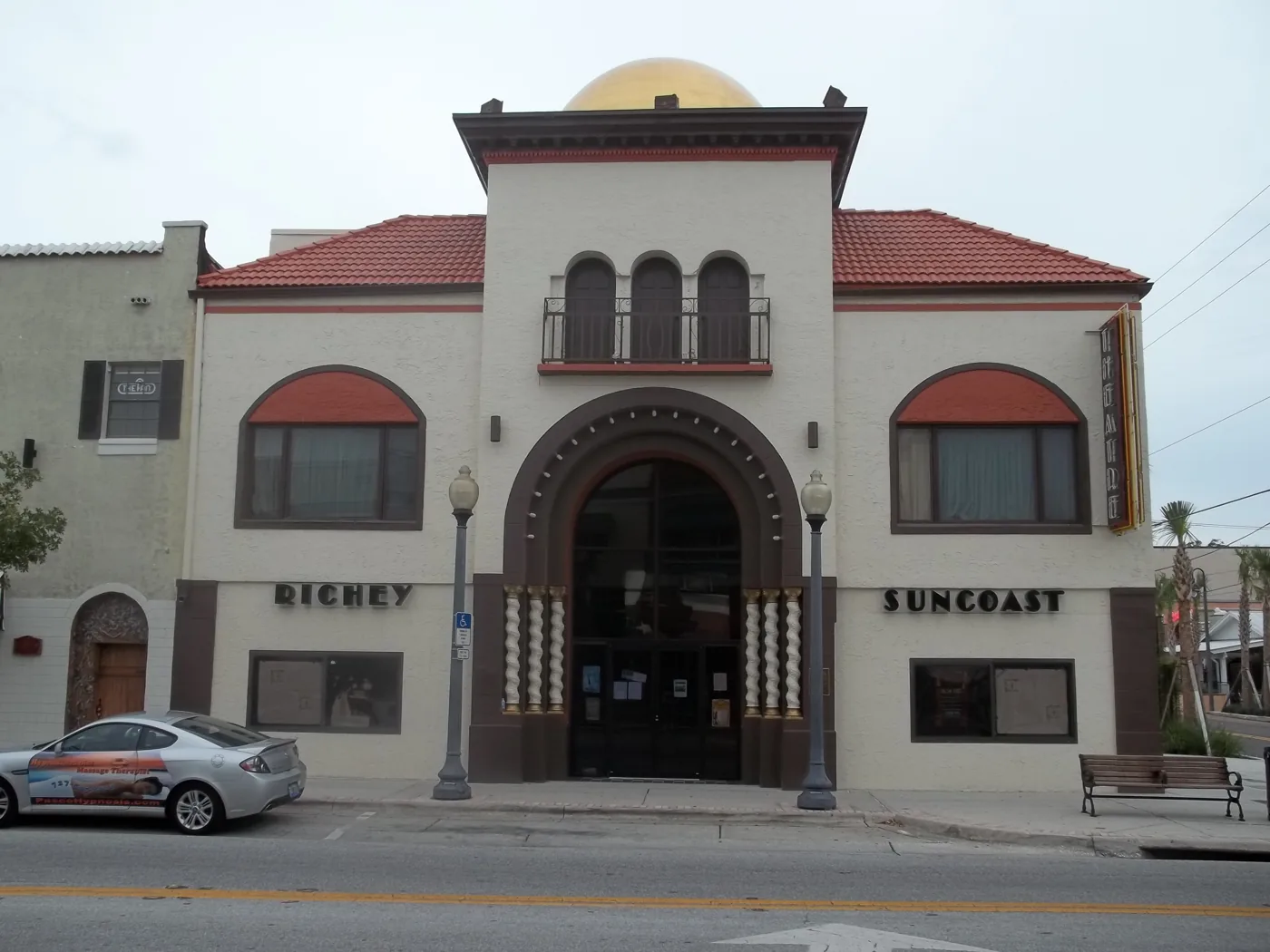
The grand theater downtown — 1926
Meighan Theatre, New Port Richey. Photo: Ebyabe / Wikimedia Commons (CC BY-SA 3.0).
The theater with the movie star's name
Back in New Port Richey, the dream got a building. On July 1, 1926, the Meighan Theatre opened downtown, named in tribute to the town's favorite film star. The first picture on the screen was The New Klondike — a Thomas Meighan movie, of course.
It was a real moment for a small town: its own grand theater, carrying a Hollywood name. What the records don't show is any sign it was air-conditioned. So picture the glamour of a movie palace and the heat of a Florida July, in the same room, at the same time.
Sixty miles south, the room went cold
The two worlds finally met — just not here. On September 10, 1926, the Florida Theatre opened in St. Petersburg with something New Port Richey's theater didn't have: air conditioning.
By the accounts of the night, it worked a little too well. As the local band played the opening, patrons in their fine clothes sat in the cooled house and shivered. Cold air, in September, in Florida, on purpose — for most of them, a first.
That's the moment the movies and the machine came together on the Gulf Coast. It happened down the road, while New Port Richey was still betting everything on the star and the name.
The Hacienda — 1927. Steam heat.
Hacienda Hotel, New Port Richey. Photo: Ebyabe / Wikimedia Commons (CC BY 2.5).
What luxury looked like before the thermostat
The last big piece of the dream opened in February 1927: the Hacienda, a Spanish-style hotel with fifty rooms and a shaded central courtyard, built to house the crowd New Port Richey still believed was coming.
Look at what it advertised as comfort. Not cool air — steam heat, for the mild winters, and a courtyard where a guest could catch a breeze. In 1927, that was luxury. The idea that you'd chill the whole building in summer simply wasn't on the menu yet.
The guest book was genuinely starry for a town this small. Thomas Meighan came, as did comedian Ed Wynn, who spoke at the naming, along with the writer Ring Lardner and the famous attorney Clarence Darrow.
Not every big name checked in, though. Gloria Swanson's name got attached to the town for years — and by her own account she said she'd never even visited. It's a good reminder that a famous face on a brochure isn't the same as a famous face at the front desk.
The dream cooled off. The air didn't.
The Hollywood-of-the-East chapter didn't last long. Florida's land boom collapsed in the late 1920s, the money that was going to build a movie colony dried up, and the town went quietly back to being a town.
But the other thing that arrived in those same few years kept going. Refrigerated air didn't stop at the St. Petersburg theater. It spread to more theaters, then stores, then homes — and it slowly rewrote what a hot, humid state was even capable of.
New Port Richey chased a version of Florida built on movie stars, and it slipped away. The version that actually stuck was the cold air a doctor over in Apalachicola had sketched out seventy-five years too early.
Sources & photo credits
Facts
- John Gorrie, 1851 refrigeration patent & yellow-fever cooling — John Gorrie Museum State Park, Florida State Parks. Accessed Aug 4, 2026.
- Willis Carrier, 1902 first modern system & 1922 centrifugal chiller — Carrier company history (carrier.com). Accessed Aug 4, 2026.
- Thomas Meighan Theatre, opened July 1, 1926, film The New Klondike; no evidence of air conditioning — West Pasco Historical Society. Accessed Aug 4, 2026.
- Florida Theatre, St. Petersburg, opened Sept 10, 1926 with air conditioning; patrons “shivered”; film Tin Gods — St. Petersburg Museum of History. Accessed Aug 4, 2026.
- Hacienda Hotel, opened Feb 1927; Spanish design, steam heat, central courtyard; guests incl. Thomas Meighan, Ed Wynn, Ring Lardner, Clarence Darrow; Gloria Swanson reportedly denied visiting — West Pasco Historical Society. Accessed Aug 4, 2026.
Photographs
- Hacienda Hotel, New Port Richey — photo by Ebyabe, Wikimedia Commons, CC BY 2.5. File: hacienda-hotel-new-port-richey.
- Meighan Theatre, New Port Richey — photo by Ebyabe, Wikimedia Commons, CC BY-SA 3.0. File: meighan-theatre-new-port-richey.
- Thomas Meighan, 1922 — Strauss-Peyton Studio, Picture-Play Magazine, Wikimedia Commons, public domain. File: thomas-meighan-1922.
- Dr. John Gorrie, portrait at the John Gorrie Museum — photo by Ebyabe, Wikimedia Commons, CC BY-SA 3.0. File: john-gorrie-portrait.
- John Gorrie ice machine (model) — Wikimedia Commons, public domain. File: john-gorrie-ice-machine.
- Willis Carrier, 1915 — Carrier company history / Wikimedia Commons, public domain. File: willis-carrier-1915.
Handwriting font: Caveat (SIL Open Font License), self-hosted. Some period New Port Richey street, theater-opening, and Florida Theatre images live in the State Archives of Florida (Florida Memory) and would enrich this page further; they were not machine-retrievable here and are noted in the project's source-record.md for later addition.