
Belleair · 1897–2016
The Wooden Palace— That Emptied Out Every Summer
A railroad tycoon built one of the biggest wooden buildings in the country on a Belleair bluff — for guests who were gone before the Florida heat arrived.
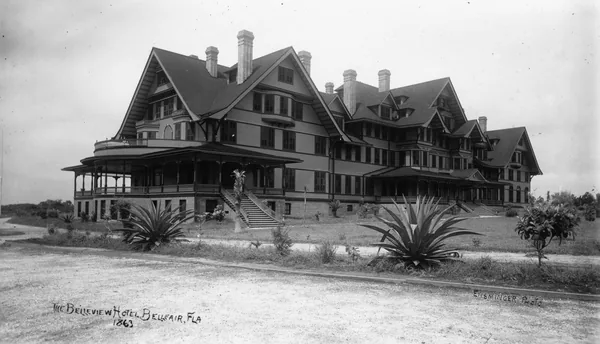
On a low bluff above the water in Belleair, there once stood a wooden building so big it's hard to believe now. Acres of it — porches wrapped around porches, a roofline bristling with dormers and chimneys, all of it built from native Florida heart pine.
Locals liked to call it the largest wooden building in the world. The record books are stingier — it was the second-largest occupied wooden structure in the country. Either way, it was enormous. And for a good chunk of every year, almost nobody was in it.
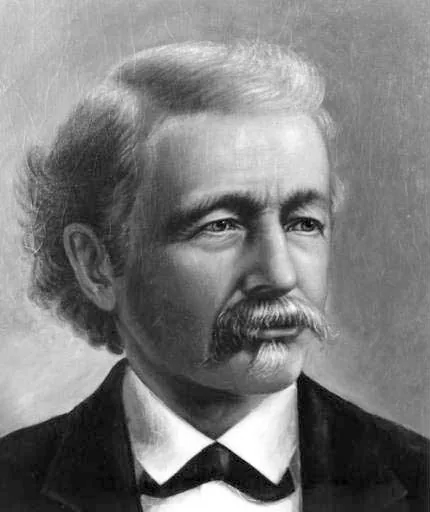
Henry Plant — the railroad man
Henry Bradley Plant. Public domain, via Wikimedia Commons.
A hotel at the end of a railroad
It was the work of Henry Plant, a railroad tycoon who looked at Florida's Gulf coast in the 1890s and saw a place to send wealthy Northerners fleeing the winter freeze. He built the Belleview in the summer of 1896, and it opened its doors on January 15, 1897.
Plant's real genius was the train. His line ran right onto the hotel's own grounds — a car called the Pinellas Special came straight down from New York City to a station on the property. A guest could step off the train and into the lobby without ever really setting foot in Florida.
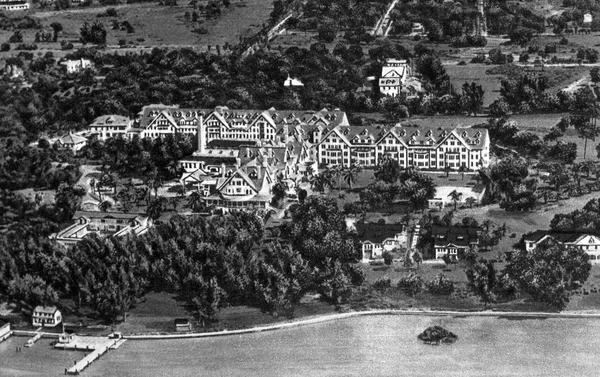
The whole thing, from the air
The Belleview Biltmore at Belleair, c. 1940. State Archives of Florida, Florida Memory.
Gilded-Age everything
Inside, it was exactly as grand as that entrance promised. Over the years the resort grew to hundreds of rooms, a dining hall the length of a ballroom under a stained-glass ceiling, deep shaded lounges, and eventually two full golf courses laid out by the famous designer Donald Ross.
This was a place built to impress people who were hard to impress — the kind who summered on Cape Cod and expected the same polish wherever they went.
You arrived by train, at the door
South Entrance, The Belleview. Public domain, via Wikimedia Commons.
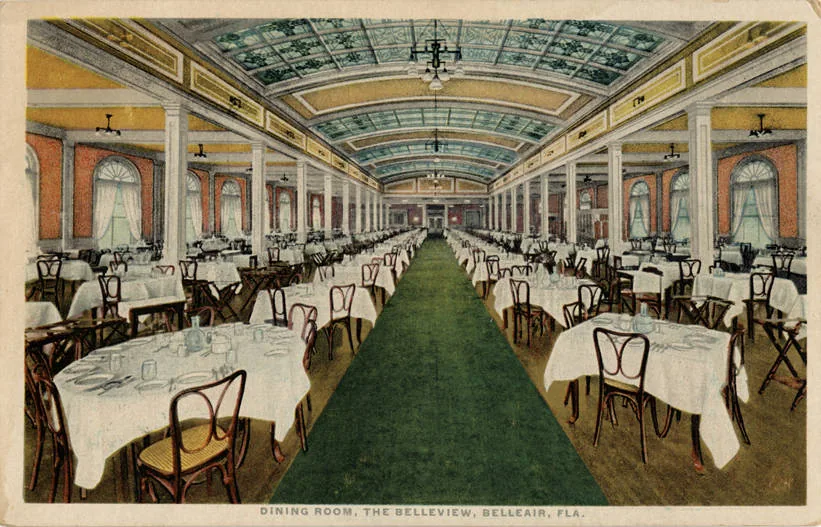
The dining hall
Dining Room, The Belleview. Public domain, via Wikimedia Commons.
They built a palace for the winter — and handed the Florida summer back to the mosquitoes.
Now look at the season
Here's the thing everyone forgets about a place like this. It was a winter resort. The whole business ran on Northerners riding south to escape the cold, then heading home again before the real Florida heat set in.
Even the staff followed the weather. Crews would work the summer up on Cape Cod and come down to Belleair for the winter season — a few months of work, then back north, chasing the comfortable air the way the guests did.
Because there was no other option. You could not cool a wooden building the size of a small town, packed with people, in a Gulf-coast August. So nobody tried. The grand hotel didn't fight the summer. It simply closed the shutters and waited the summer out.
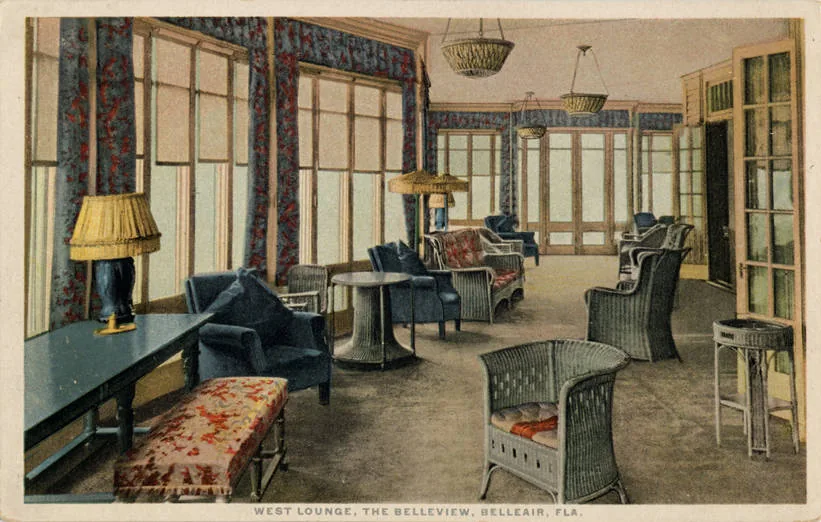
Where the guests waited out the heat of the day
West Lounge, The Belleview. Public domain, via Wikimedia Commons.
A hundred years, and then the wrecking crews
The Belleview outlasted almost everything like it. The name picked up "Biltmore" in the 1920s under new owners; soldiers were quartered there during the war; presidents and celebrities passed through. When it finally closed in 2009, it was the last of Henry Plant's grand hotels still in operation.
Then the wrecking crews came. By 2016, about ninety percent of it was gone.
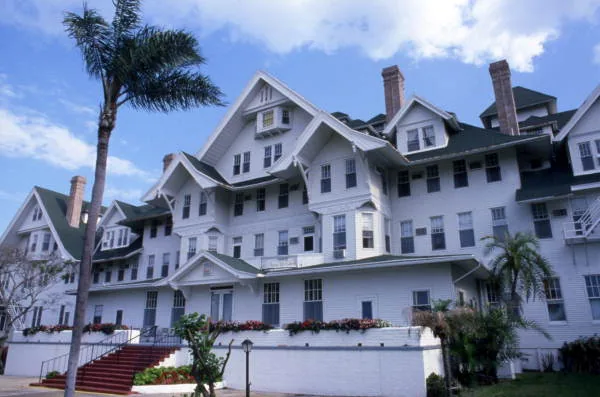
The long later years
The Belleview Biltmore, later 20th century. State Archives of Florida, Florida Memory, via Wikimedia Commons (public domain).
They saved the last ten percent — by rolling it
Not all of it came down. Crews cut loose the surviving core — the old lobby, some 1,750 tons of heart pine — set it on hydraulic dollies, turned the whole thing ninety degrees, and rolled it 375 feet across the property to a new foundation. That was December 21, 2016.
Restored, that saved piece reopened in December 2018 as the Belleview Inn: a trim white clapboard hotel that is maybe a tenth the size of the giant it came from.
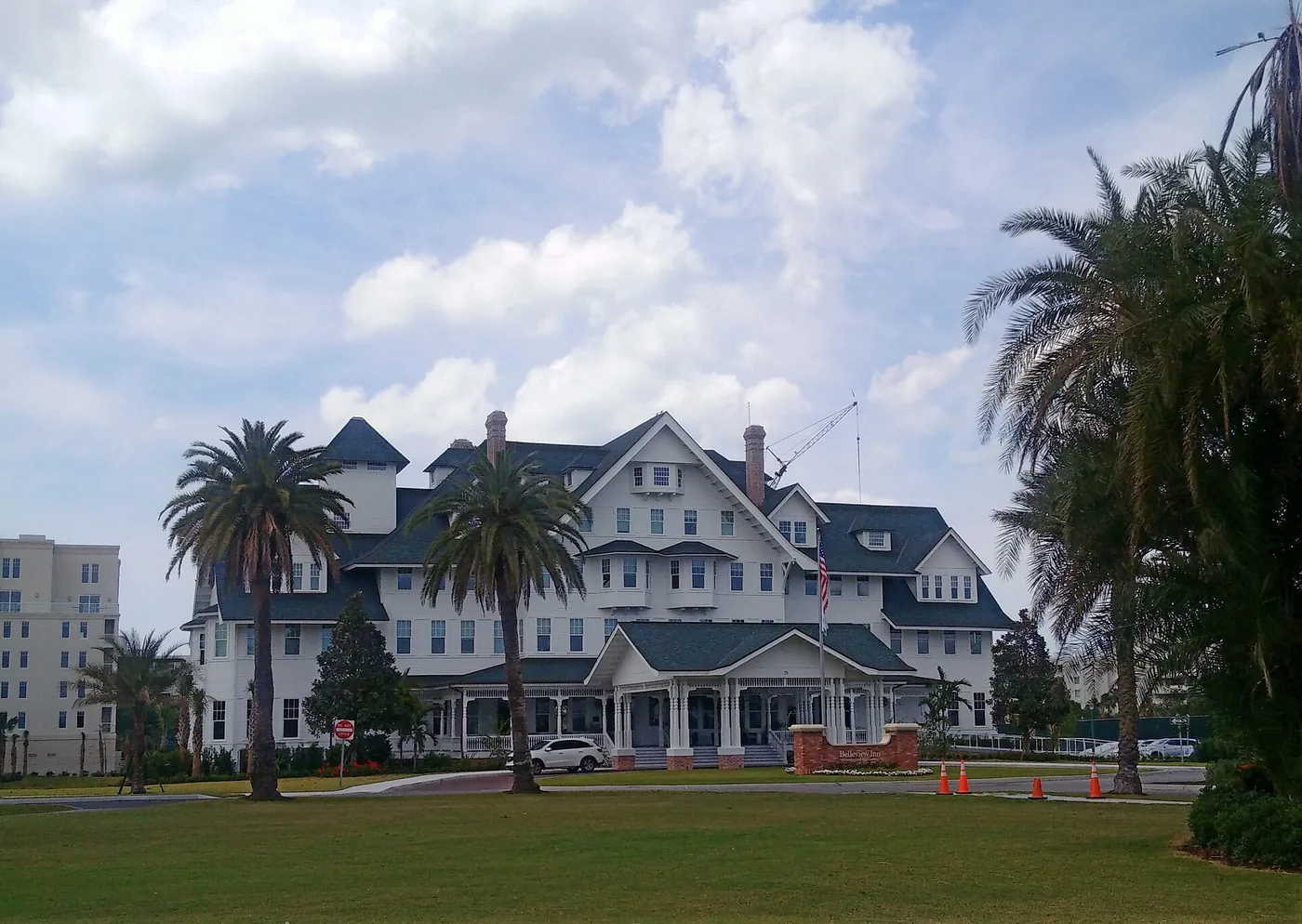
What they saved — the Belleview Inn, 2019
The Belleview Inn, 2019. Photo: JGHowes, via Wikimedia Commons (CC BY 3.0).
Why the giant couldn't last
Step back and the real reason the old model died is simple. That whole enormous, seasonal, close-in-the-summer world existed because year-round comfort down here didn't. A building that could only be used half the year was, in the end, a building waiting for a technology that hadn't arrived.
Air conditioning is what arrived. Once you could cool a room — then a house, then a whole hotel — the Gulf coast stopped being a winter escape and became a place you could simply live, in July, without a second thought. The Belleview was built for the world before that. The little white inn is what's left of it.
Sources & photo credits
Facts
- Built by railroad tycoon Henry B. Plant in the summer of 1896; opened January 15, 1897; the Atlantic Coast Line "Pinellas Special" ran from New York City to a station on the hotel's property — Wikipedia, "Belleview-Biltmore Hotel." Accessed Aug 4, 2026.
- Constructed of native Florida heart pine; the second-largest occupied wooden structure in the U.S. (after the Hotel del Coronado); grew to hundreds of rooms over repeated expansions — Wikipedia, "Belleview-Biltmore Hotel." Accessed Aug 4, 2026.
- Built as a winter resort for wealthy Northerners escaping the freeze; staff worked seasonally (Cape Cod in summer, Belleair in winter, ~4–5 months) — St Pete Catalyst, "Vintage Pinellas: The Belleview Biltmore"; Opal Collection (Belleview Inn). Accessed Aug 4, 2026.
- Two 18-hole golf courses designed by Donald Ross — First Call Golf; GolfPass, "Belleview Biltmore Golf Club." Accessed Aug 4, 2026.
- Closed in 2009 as the last operating Henry Plant hotel; ~90% demolished by 2016 — Wikipedia; St Pete Catalyst. Accessed Aug 4, 2026.
- December 21, 2016: the preserved ~1,750-ton core was placed on hydraulic dollies, rotated 90° and moved 375 feet; reopened as the Belleview Inn on December 5, 2018 — Wikipedia, "Belleview-Biltmore Hotel." Accessed Aug 4, 2026.
Photographs
- The Belleview Hotel, Belleair, 1899; the hotel from the air, c. 1940; and a later-20th-century view — State Archives of Florida, Florida Memory (public domain), via Wikimedia Commons.
- Henry Bradley Plant — public domain, via Wikimedia Commons.
- South Entrance, Dining Room, and West Lounge, The Belleview — vintage postcards, public domain, via Wikimedia Commons.
- The Belleview Inn, 2019 — photo by JGHowes, via Wikimedia Commons (CC BY 3.0).
Handwriting font: Caveat (SIL Open Font License), self-hosted. The "largest wooden building in the world" line is presented as the local legend it is; by the record it was the second-largest occupied wooden structure in the U.S. Additional Belleview interiors and grounds sit in the State Archives of Florida (Florida Memory) for later addition.