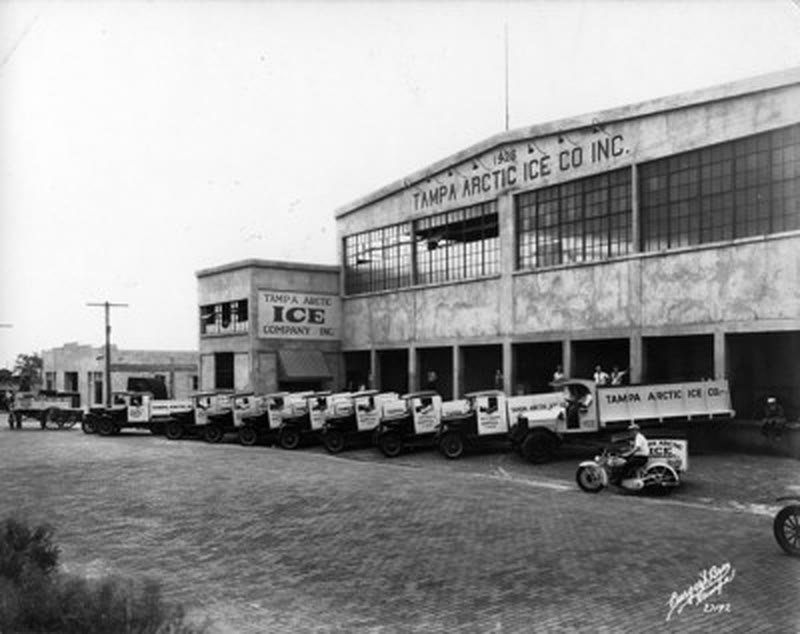
Richard Doby could not read or write. He hauled other people's ice and other people's garbage for a living. And by the time he died in the 1930s, he owned more of Tampa than most of the white families whose kitchens he delivered to.
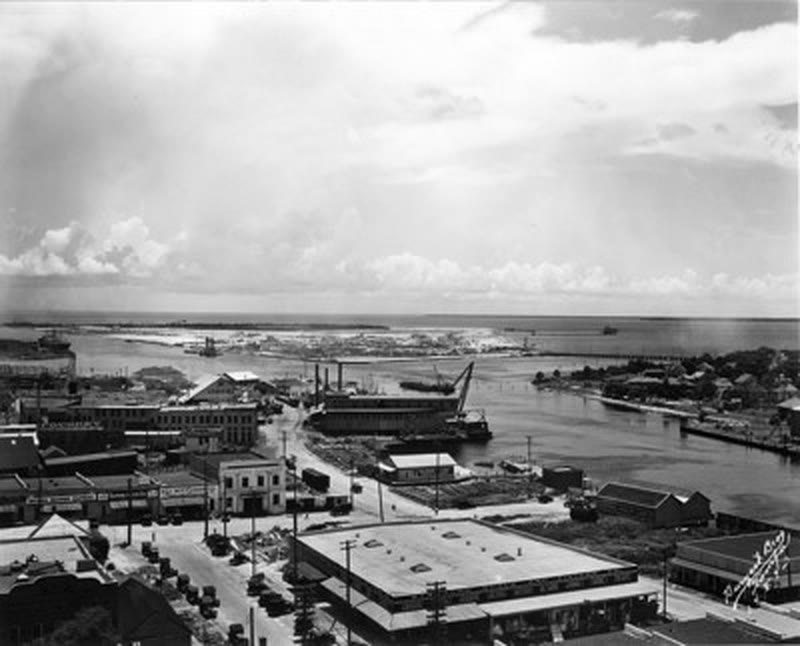
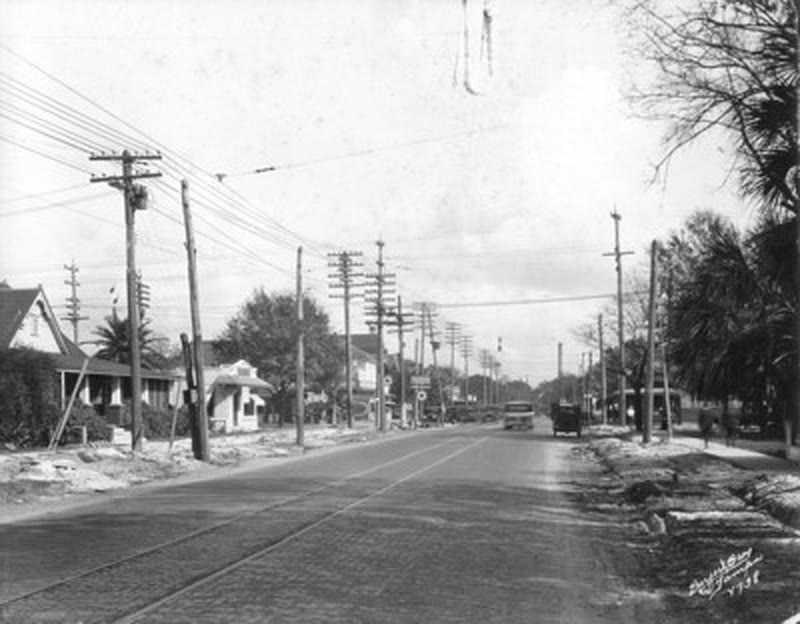
He lived in the northwest corner of Hyde Park, the leafy bend of South Tampa that was, by 1910, the most fashionable address in the city. Electric streetcars ran up widened avenues past new mansions. Bayshore was filling in. Hyde Park was where Tampa's money moved to be seen.
The people who cooked in those houses and gardened those lawns and drove those cars had to live somewhere too. They lived a few blocks over, in a neighborhood that took Doby's name: Dobyville.
"You can't tell the story of Hyde Park without telling the story of Dobyville at the same time."
— Rodney Kite-Powell, Tampa Bay History CenterFor a long time, Tampa told only the first half.
A stack of deeds he couldn't read
Doby got to Tampa in the 1880s, from a farm in Alachua County, the son of two people born into slavery in South Carolina. He couldn't sign his own name. What he could do was work, and buy.
Ice and trash were businesses nobody fought a Black man for, and he ran them into real estate, lot by lot, until he was one of the larger landowners in the city. A man who could not read a deed, holding a stack of them.
What he did with the land is the part the marker remembers. He gave the ground for the neighborhood school. He helped pay for a church. In 1901 he bought a small plot north of downtown, about two and a half acres, for a hundred dollars. On it he opened Zion, the first cemetery in Tampa where Black families could bury their dead. The city forgot it so completely that it was paved under a housing project, and only rediscovered in 2019.
No photograph of Richard Doby is known to exist. The man who gave the neighborhood its name left no face to the record. Only the ground he bought, and the house that still stands on Azeele Street.
The heartbeat was the school
By the 1920s Dobyville held nearly three thousand people, about one in ten Black Tampans, and it had stopped being just worker housing. It had three churches and its own commercial spine.
Many residents worked in Hyde Park's homes; many others worked all over Tampa. It was becoming a middle-class neighborhood that happened to sit inside a rich white one.
The heart of it was the school. Dobyville Elementary opened around 1910 on the land Doby gave, and the people who went there still talk about it like a household.
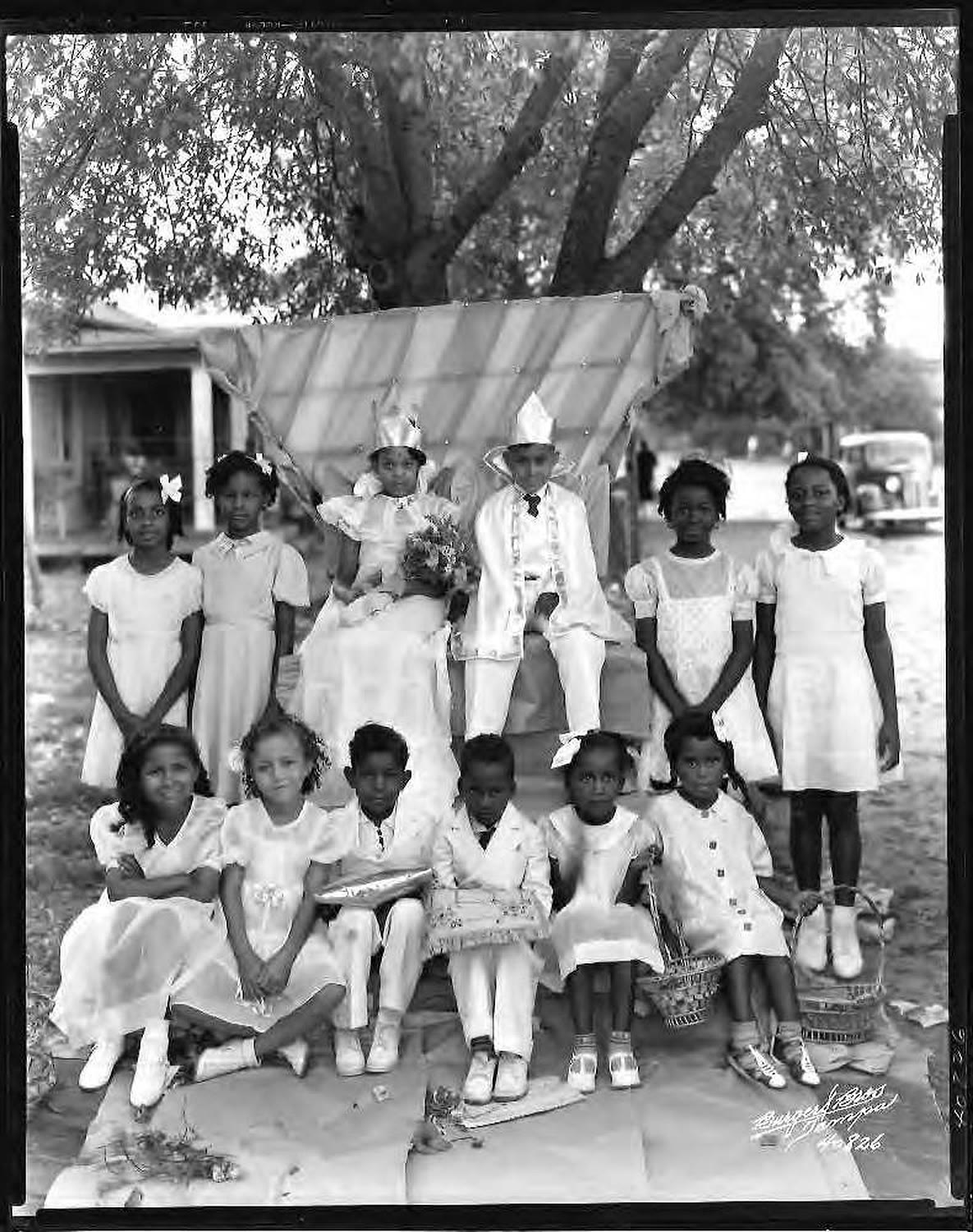
"Everybody was like family. We still get along like family, like sisters and brothers." — Christine Houston, sixth grade at Dobyville School, 1952
The county did not love the school the way the neighborhood did. It was underfunded and let go; the lunchroom was condemned in the late 1940s. And the children kept coming anyway, until desegregation closed it for good in 1966.
Donated, or taken?
There is a tidier version of all this, and not everyone in Tampa believes it. The tidy version says the land was given, the arrangement was neighborly, everyone got along.
When the History Center's talk on Dobyville reached the point about land changing hands on a handshake, a viewer asked the question a lot of people were thinking: was the land really donated, or was it taken, the way so much land in this country was taken? Another answered him in four words: "you know they was segregated."
The record shows Doby gave the ground for the school. What it can't fully settle is how freely anything was given in Jim Crow Tampa. The honest thing is to leave that question where the neighborhood left it: open.
The marker reads
DOBYVILLE
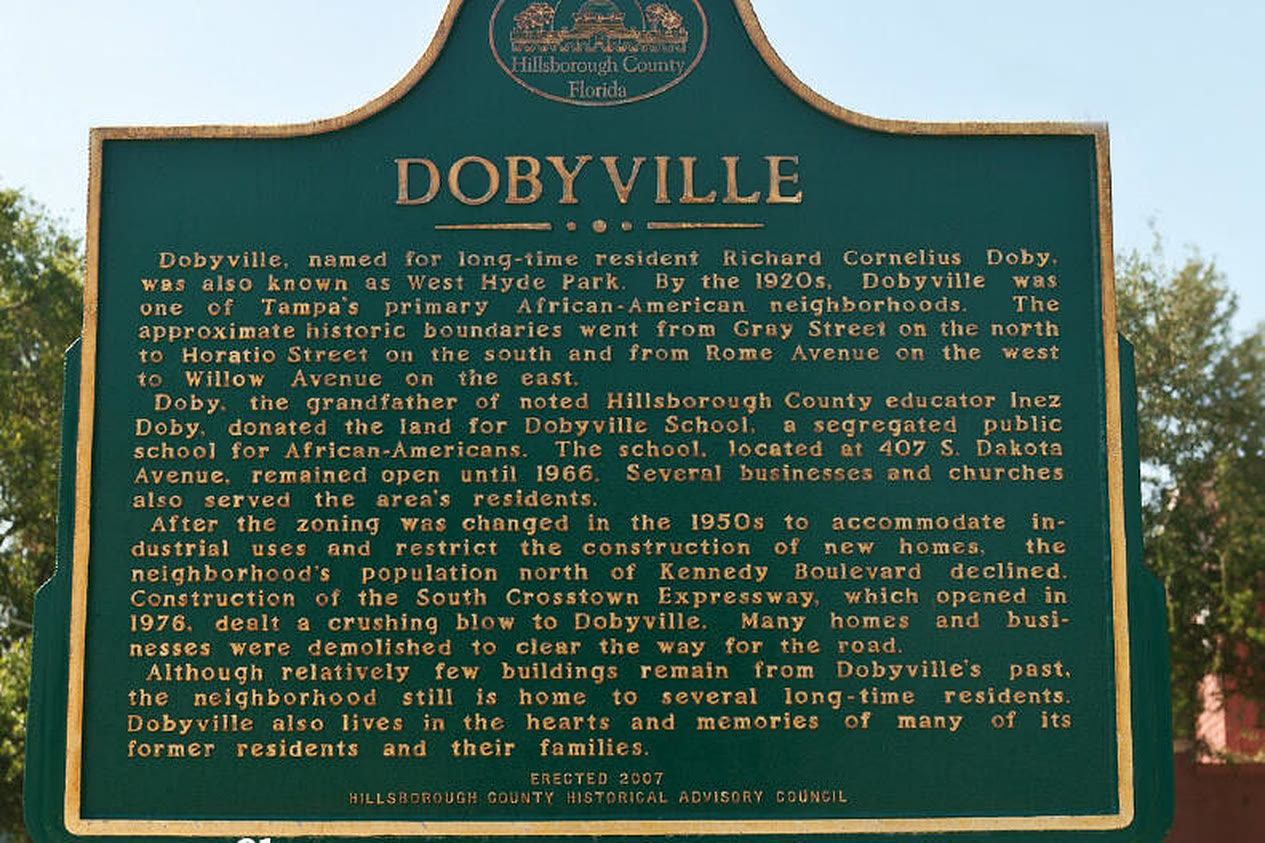
"Dobyville, named for long-time resident Richard Cornelius Doby, was also known as West Hyde Park… Doby donated the land for Dobyville School, a segregated public school for African-Americans… After the zoning was changed in the 1950s to accommodate industrial uses and restrict the construction of new homes, the neighborhood's population declined. Construction of the South Crosstown Expressway, which opened in 1976, dealt a crushing blow to Dobyville. Many homes and businesses were demolished to clear the way for the road."
Erected 2007 — Hillsborough County Historical Advisory Council · City of Tampa Soul Walk
It happened in stages, on paper
What happened to Dobyville next did not happen on a handshake. In the 1950s the city rezoned the area for industry and restricted new homes, a quiet way to stop a neighborhood from replacing itself. In 1966 the school closed.
Then, in the mid-1970s, the state ran the elevated Crosstown Expressway straight through the top of Hyde Park, and the concrete came down on Dobyville. Much of the neighborhood was cleared for it. The expressway split what was left in two.
Fifty years, one neighborhood
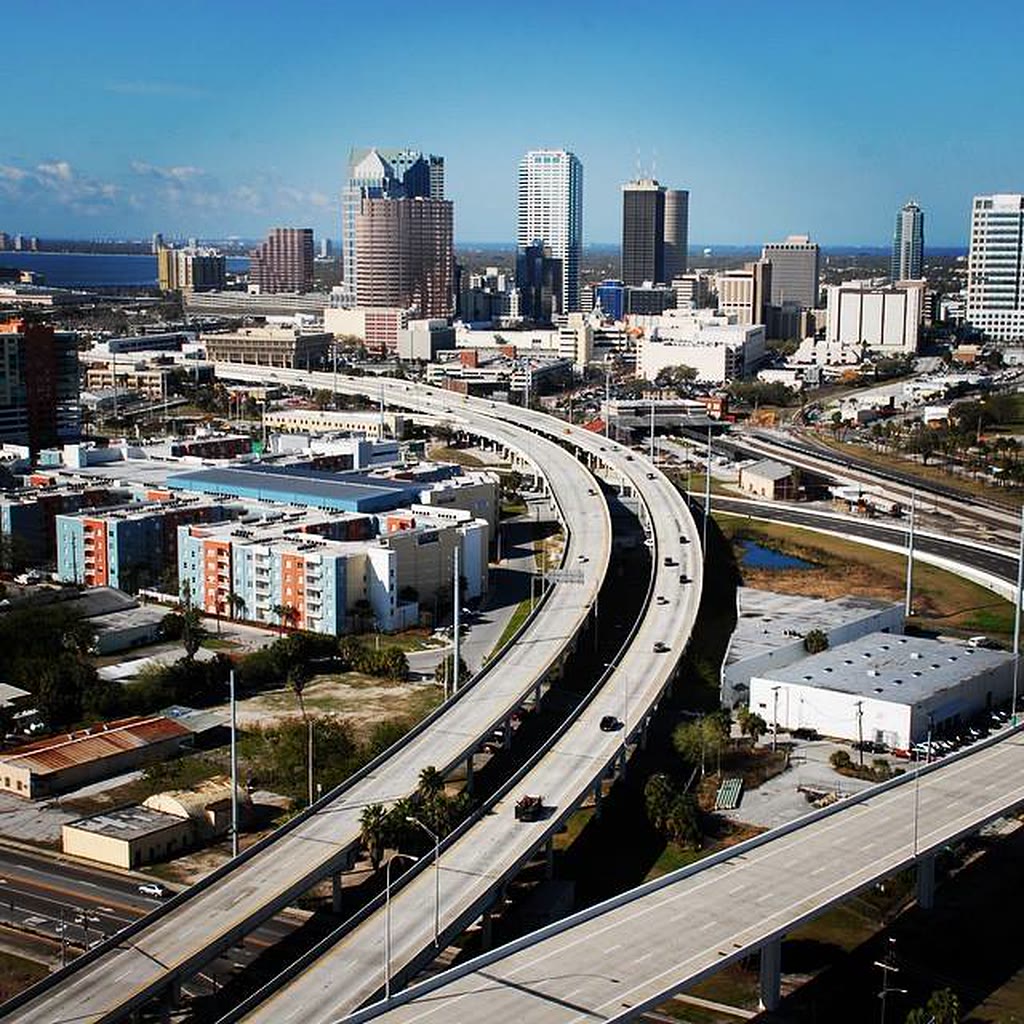
One was preserved. One was not.
Here is the contrast the old "lost mansions" story hides. The expressway did not take Hyde Park's mansions. The grand homes along Bayshore are still there. That's why, in 1985, Hyde Park was listed on the National Register of Historic Places and got a preservation society that had been founded in 1974 specifically to fight the road.
The neighborhood that organized, that had lawyers and letterhead, saved its houses. The neighborhood a few blocks over did not get the chance.
Hyde Park
Preserved
Organized in 1974. National Register, 1985. A preservation society, lawyers, letterhead. The mansions still stand on Bayshore.
Dobyville
Cleared
Rezoned in the 1950s. School closed in 1966. Much of it cleared for the expressway. The name faded to "West Hyde Park."
One Hyde Park was preserved. The other was rezoned and closed and cleared, and later, where anything survived, turned into condos. The old Seybold Bakery on Dakota Avenue is "Seybold Lofts" now. For a while almost nothing was left to point at. Mt. Zion AME, built in the 1910s, was torn down in 2008.
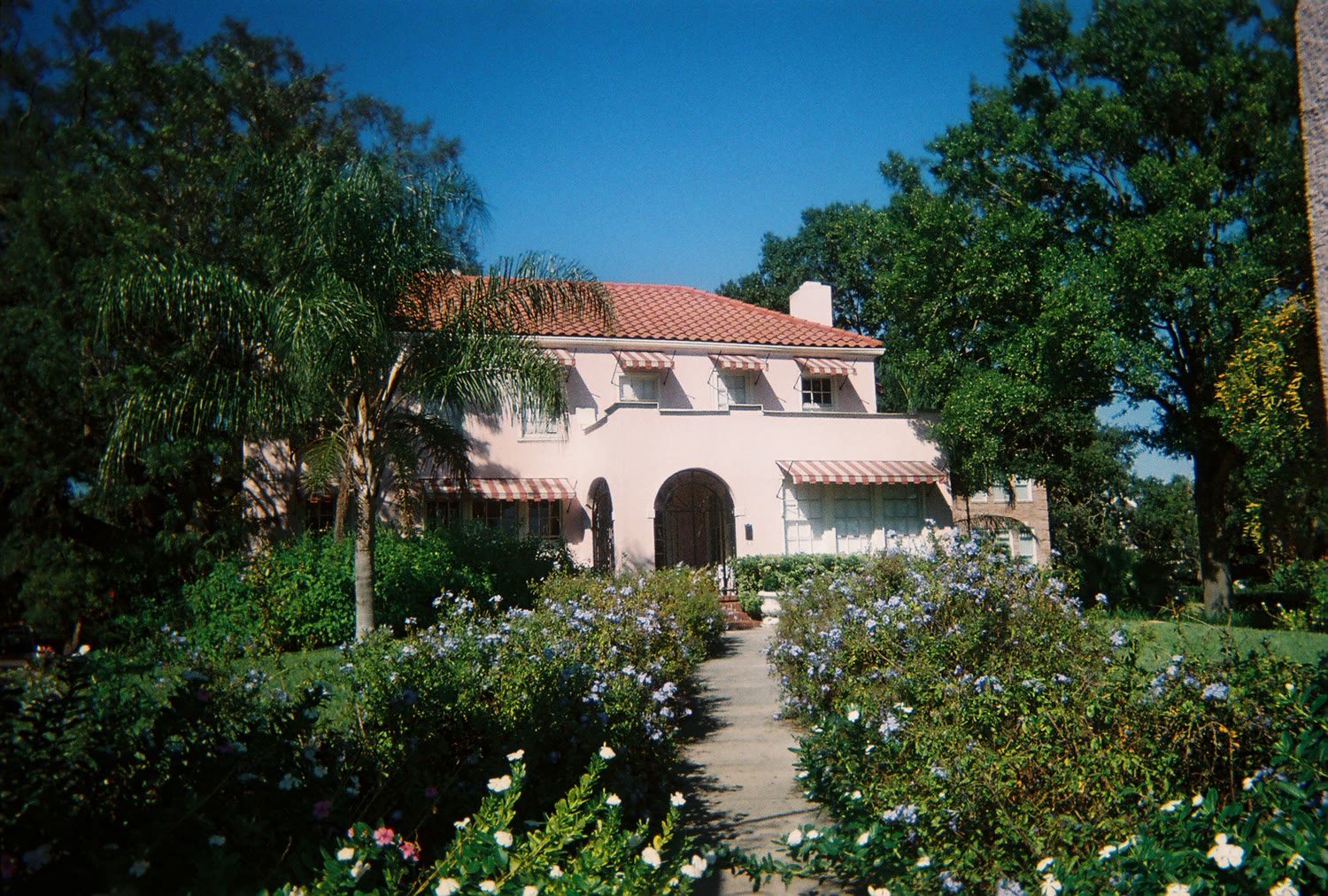
His house is still on Azeele Street
But not all of it went. Doby's own house, built around 1912 on Azeele Street, is still standing, and in 2025 the city moved to protect it as a local landmark. His home had outlasted the neighborhood he named.
There's a marker now, put up in 2007, and a City of Tampa "Soul Walk" panel that tells the story in the government's own words. Zion Cemetery, the ground he bought for a hundred dollars, got its own marker in 2025, and the names of some seven hundred people were read back out loud.
And the family is still here. Doby's descendants can trace the line from an illiterate ice-hauler to his grandson Richard B. Doby, who retired an Army master sergeant and went on to run a bank. He served the state as a banking commissioner and sat on a Federal Reserve board. The oldest of them, Booker Doby, was about ninety when he described the man plainly, the way you'd describe a relative and not a monument:
"He drove a truck. He picked up garbage. He delivered ice. I remember that." — Booker Doby, on his grandfather
He owned the ground under a neighborhood that a rich city built its comfort on, in an era that never quite let him belong to it. Tampa spent fifty years turning Dobyville back into Hyde Park. His house is still on Azeele Street.
Sources & Photo Credits
Story & facts
- Tampa Bay History Center — "Dobyville" (curator Rodney Kite-Powell); on-camera interview via 10 Tampa Bay News, 2021.
- City of Tampa — Soul Walk historic marker, "Dobyville" (marker text erected 2007, Hillsborough County Historical Advisory Council).
- Hillsborough County — "Faces Behind the Places: Dobyville."
- Doby House local-landmark designation (2025) — Tampa Bay Times; Tampa Bay History Center.
- Doby family oral history (Booker Doby, Richard B. Doby, Inez Doby) — 83 Degrees Media, 2022.
- Zion Cemetery (founded 1901; rediscovered 2019; marker 2025) — WUSF; Tampa Bay Times.
- Hyde Park Preservation Inc. (founded 1974) — oldhydeparktampa.com. Hyde Park Historic District, National Register, listed March 4, 1985.
Photographs
- Hyde Park panorama, 1925 — Burgert Brothers Collection, Tampa-Hillsborough County Public Library (USF DigitalCommons record 28). No Copyright – United States.
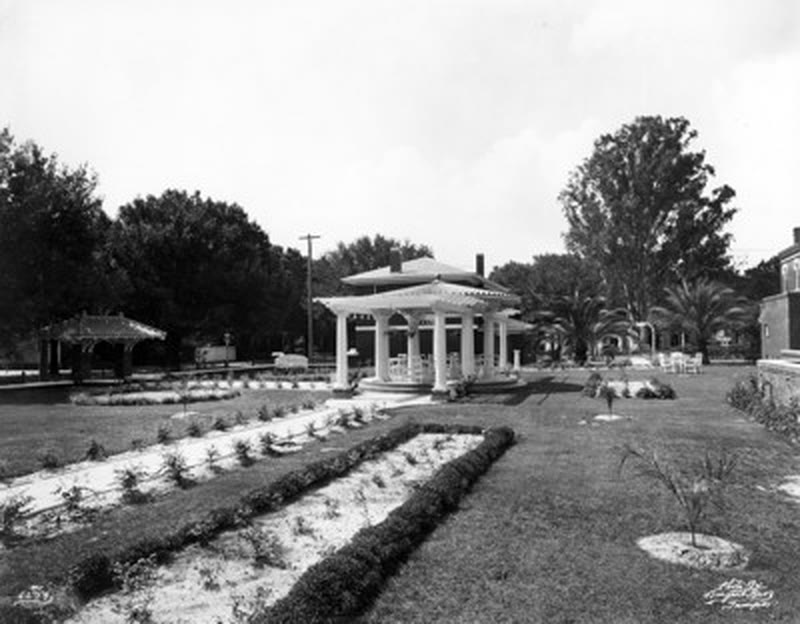
- Grand South Tampa residence, 1921 — Burgert Brothers (record 259). No Copyright – United States.
- Tampa Arctic Ice Company trucks, July 31, 1928 — Burgert Brothers (record 60). No Copyright – United States.
- Grand Central Avenue street & streetcar, 1925 — Burgert Brothers (record 450). No Copyright – United States.
- Dobyville School May Day court, May 3, 1937 — Burgert Brothers, Tampa-Hillsborough County Public Library System (digital collections pointer 16909). Courtesy, Tampa-Hillsborough County Public Library System.
- Hyde Park Historic District bungalow (modern) — photo Ebyabe, CC BY 2.5, via Wikimedia Commons.
- Dobyville historical marker (2007) — Courtesy City of Tampa / Soul Walk.
- Lee Roy Selmon / Crosstown Expressway (modern) — Tampa Hillsborough Expressway Authority, public domain, via Wikimedia Commons.
Archival photographs are shown in their true form; framing and captions are added in layout only. No person, building, or detail has been altered or AI-generated. Full research and rights records are kept with the story file.