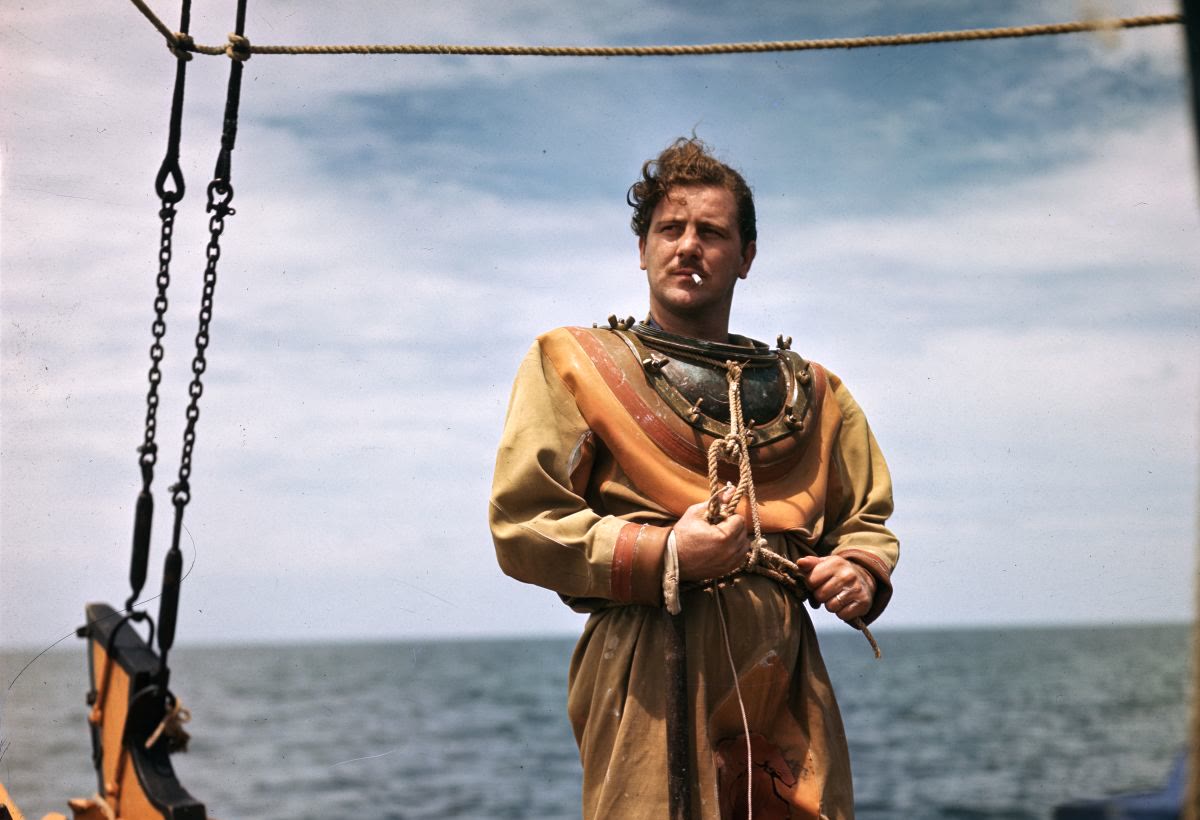
Ninety feet down on the floor of the Gulf of Mexico, in water too dark to see a hand in front of a face plate, a man in a canvas suit and a bronze helmet is walking. He is bent against the current, breathing air pushed to him through a hose from a boat he can't see, and he is looking for sponges. Everything above him — a whole town, a domed church, the most Greek community in America — is standing on what men like him carry up off this floor.
And roughly one in twenty of them, every year, will not come up right. Some surface too fast, the pressure still in their blood, and are dead before the boat reaches the dock. Others are lifted out alive and never walk again. That was the arithmetic behind the best-paying job in Tarpon Springs — and behind the town it built.
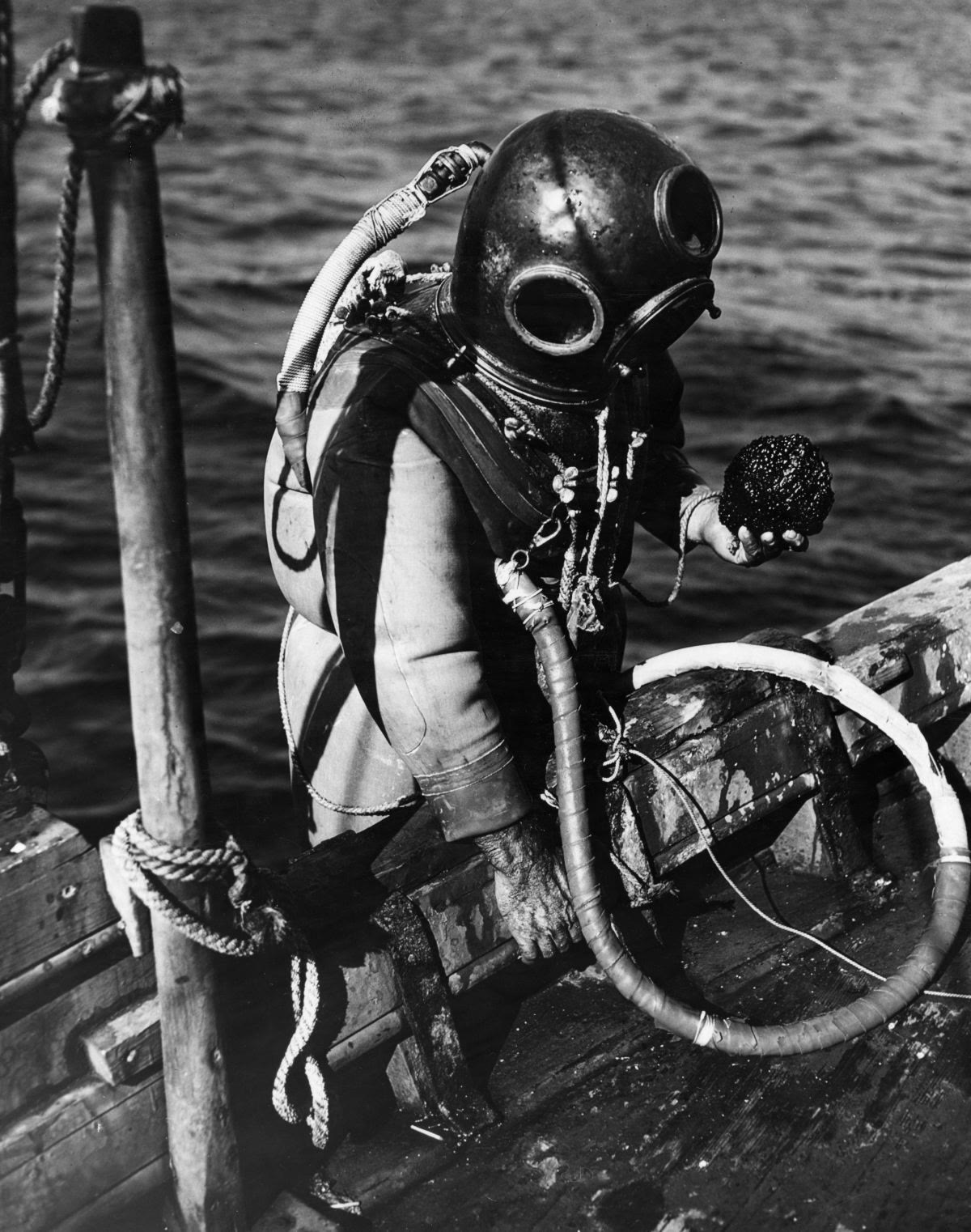
The archives even kept a name and a face. This is a diver named John Gonatos, photographed pulling on his suit on deck around 1940. Hold on to him; we'll get back to his kitchen table.
01 — before the diversA town that pried sponges with a pole
Before any of the Greeks arrived, there was already a little sponge business here, and it was a gentle one. In the 1880s an American businessman named John K. Cheyney had found that the Gulf shallows off Tarpon Springs were carpeted with natural sponge, and he built a company to gather it. His crews worked from open dinghies — one man on the oars, another leaning over the side with a bucket that had a glass bottom, staring down through the glare until he spotted a sponge, then reaching with a long pole and a pronged hook to twist it loose.
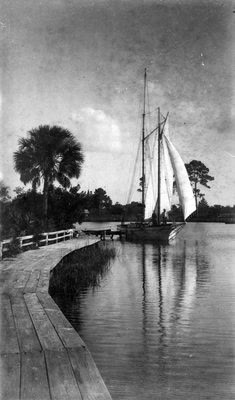
It worked, but only in shallow, clear water you could see the bottom through. The richest sponge beds — the deep ones, the ones that could make a town wealthy — lay out past where any pole could reach. Cheyney had the beds. What he didn't have was a way to the bottom.
02 — the buyer who sent for GreeceA helmet changes everything
The man who found that way was a sponge buyer named John Cocoris. He had come from Leonidio, in the Greek Peloponnese, and landed in Tarpon Springs in 1896 to grade and buy sponge for a New York firm. And Cocoris knew something Cheyney didn't: back in the Greek islands, men didn't hook sponges from the surface. They walked down and picked them, sealed inside a rubberized suit and a metal helmet fed by an air pump — a rig the Greeks called the skafandro.
In 1905 Cocoris put a diver over the side to prove it, and the man came up with sponges no hook-boat could have touched. That was the whole argument. Within a few years Cocoris and his brothers were sending home for divers by the hundreds — around 500 of them — from the Dodecanese islands of Kalymnos, Halki and Symi, where sponge diving was a centuries-old trade and the men already knew how to walk the sea floor.
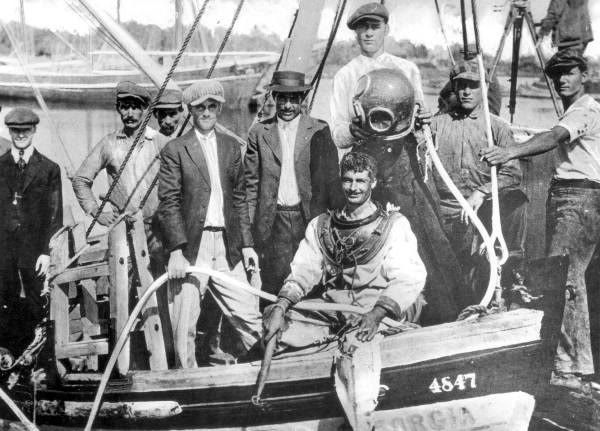
03 — a Greek town rises on the AncloteCoffeehouses, a fleet, and a market of its own
They didn't come to work a season and leave. They came with families, or sent for them, and they built a piece of Greece on the Anclote River. By 1920 more than 1,500 Greeks lived in Tarpon Springs — and even now the town has the highest share of Greek Americans of any city in the country. There were coffeehouses where the divers argued and played cards, Greek spoken along the docks, and a Greek Orthodox church at the center of it.
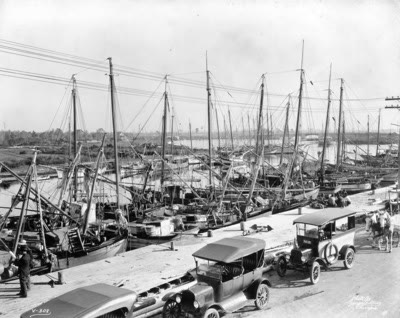
And the sponges paid for all of it. In 1907 the local buyers organized the Sponge Exchange — a walled yard of sheds where the day's catch was stored and sold off in quick, murmured auctions. By the mid-1930s more than 200 boats were working out of Tarpon Springs, ranging the Gulf from Apalachicola down to Key West and bringing in around three million dollars of sponge a year. The little bayou town had become, by its own accounting and almost everyone else's, the sponge capital of the world.
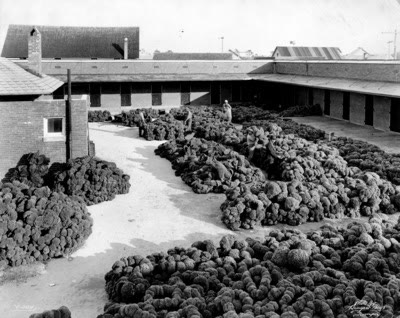
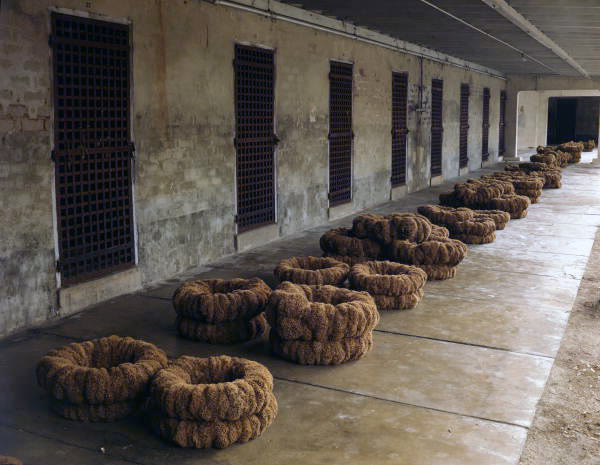
You can measure how good the money was by what came out of the water. Sponge, dried and trimmed, stacked up in the Exchange yard in ochre heaps taller than the men grading it — a soft, strange currency hauled up one handful at a time and left to cure in the Florida sun.
That wealth built more than a fleet. On the sixth of January, and on Easter, and on ordinary Sundays, it built a Greek life on the Gulf coast. John Gonatos — the diver from the first photograph — was caught again by the same camera in 1947, not on deck this time but at his family's Easter table, cracking dyed red eggs the way Greeks do, a crowd of relatives around him.
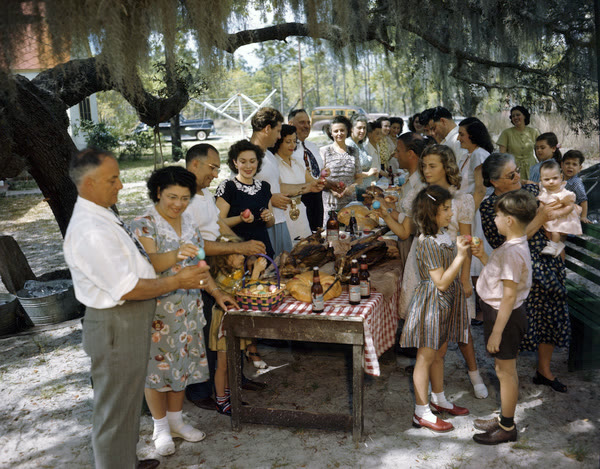
A whole Greek town — the richest of its kind in America — stood on a wealth that had to be walked up off the bottom of the sea, one sponge at a time.
04 — the price on the bottomThe suit that built the town broke the men in it
Down deep, a diver's body soaks up the gases in the air he is breathing under pressure. If he rises too quickly, those gases fizz out of his blood like a shaken bottle — the bends — and can cripple or kill within minutes. In the early years nobody fully understood it. The divers only knew that some men who went down came up bent, or paralyzed, or dead.
The numbers stayed grim even later. Into the 1950s and '60s, after decompression was understood, sponge diving still killed or permanently paralyzed roughly one diver in twenty every year. A man could earn more on a sponge boat than almost anywhere else a Greek immigrant could work in Florida — and he could lose the use of his legs for it before he was thirty. The town's prosperity and its grief came up the same air hose.
05 — the town in its vestmentsA cathedral, and a cross in the water
You can also measure the money by what the community raised toward heaven. In 1943, near the height of the boom, the Greeks of Tarpon Springs finished St. Nicholas Greek Orthodox Cathedral — a domed Byzantine church of a scale you would not expect in a Florida fishing town, paid for by sponge. It replaced the small wooden church the first settlers had put up in 1907.
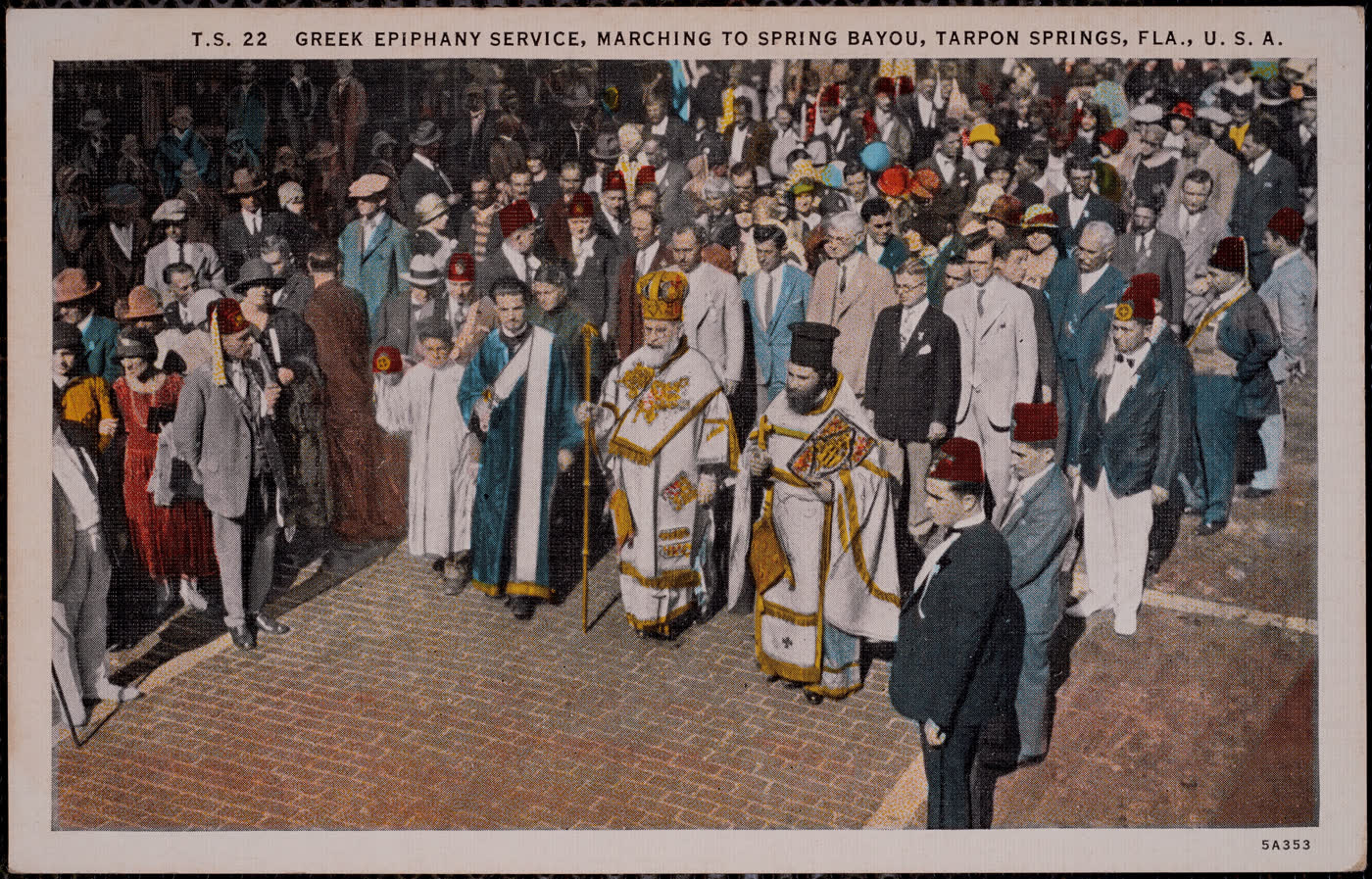
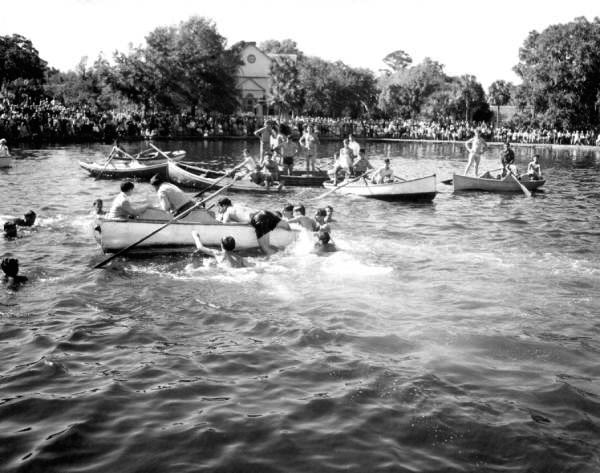
And every year on the sixth of January, since 1906, the whole town has walked from that church down to Spring Bayou for Epiphany. A bishop blesses the water and throws a white cross into the bayou, and dozens of teenage boys dive in after it; the one who surfaces with the cross is said to carry a year of good luck. It is the largest Epiphany celebration in America — and it belongs to the sponge divers. Young men going into the water for a blessing, in a town that had watched grown men go into the water for a living, and not always come back.
06 — the water turned against themOne red season, and the beds went quiet
What ended it came out of the same Gulf that had made the town. In the mid-1940s a red tide — a bloom of toxic algae — spread across the sponge beds and killed them. It did not thin the harvest; it erased it. The beds that had fed 200 boats simply stopped producing sponge. And at almost the same moment, a cheap rival arrived: the synthetic sponge, which never had to be walked up off a deadly sea floor at all.
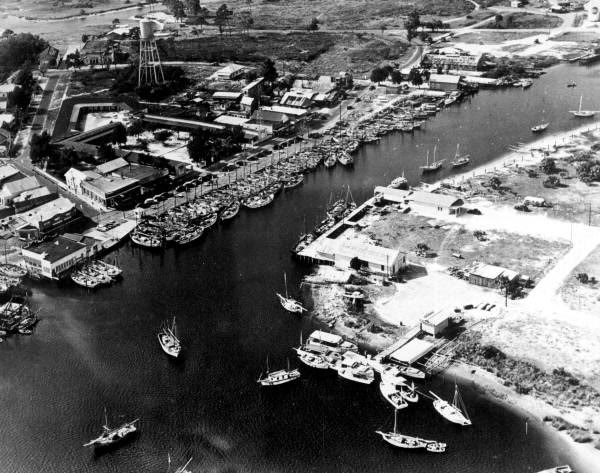
The two blows together finished the industry off in a few years. Boats that had chased sponge for decades were rigged for shrimp and fish instead. Divers hung up the copper helmet and looked for other work, or left the trade. The Exchange yard emptied out. As the engine of the town's economy, sponging never came back.
07 — what stayedThe town outlived the industry that built it
But the town the sponges built did not disappear — that's the strange part. The divers and their families stayed Greek, stayed on the Anclote, and kept the rituals going even after the reason for them had washed away. The beds recovered enough for a small trade to revive in the 1980s, when a disease hit the Mediterranean sponge, and a handful of boats still go out. The Sponge Docks are still the Sponge Docks, even if much of the sponge on the shelves now arrives to be sold rather than dived.
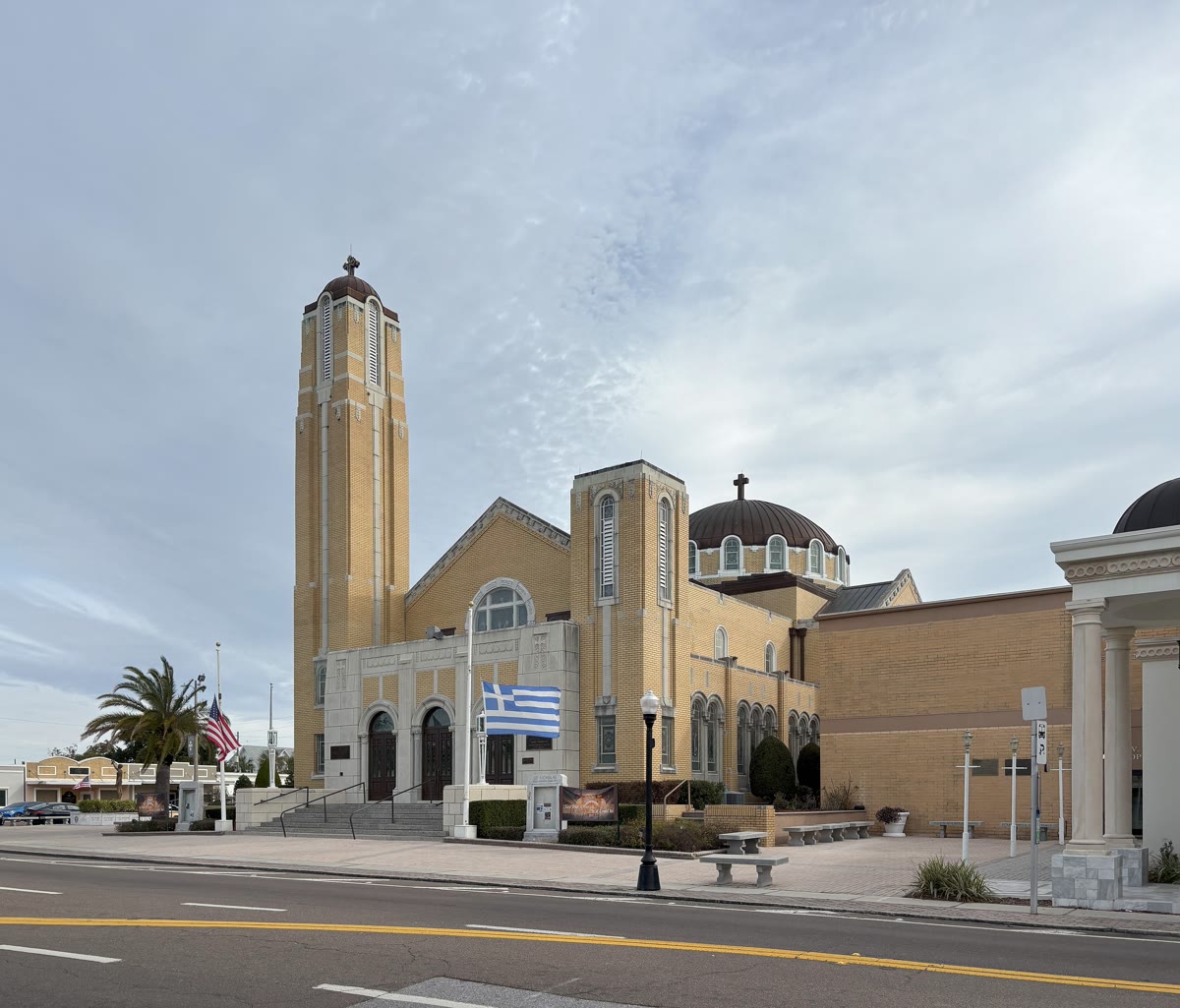
Every January the boys still dive at Spring Bayou. The cathedral the sponges paid for is still full. Tarpon Springs is still the most Greek town in America — a community carried across an ocean by an industry that made it rich, took one man in twenty of it a year, and then, in a single red season, quietly let it go.
The town is still standing on what those divers walked up off the floor of the Gulf, long after the last of them stopped going down for it.