Here is a neighborhood that named itself after a time of day. Not a founder, not a flower, not some saint off a calendar. The sunset. Which is a strange thing to do when you stop and think about it — who builds a whole place and calls it after an hour?
The answer is sitting right there in the name, if you've ever spent a July in Florida with no machine to cool you down. Because for most of this neighborhood's life, that one hour — when the sun finally drops over the water on the west side of the peninsula and the air off the bay turns — was the whole reward. It was the part of the day you got through the rest of the day to reach.
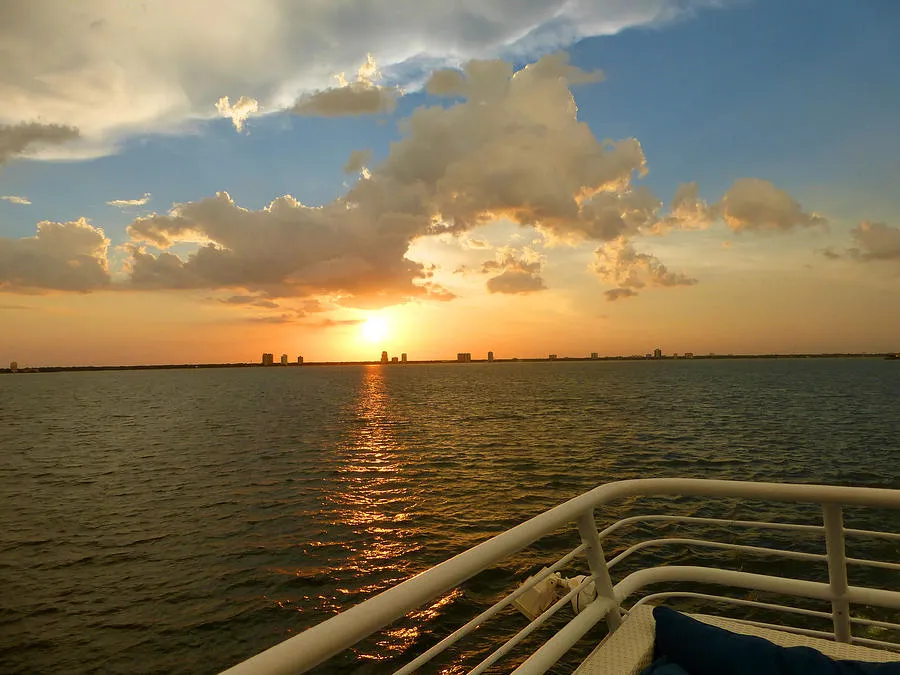
Sunset Park sits on the western edge of South Tampa, the bay at its back, and it marked its hundredth birthday in 2024. So wind it back to the middle of the 1920s, when the first lots went in.
A hundred years of waiting for evening
Florida was in the loudest stretch of the great land boom. Trains came south packed with people buying a piece of the sun, most of them from towns where winter actually hurt. What the brochures left out is the other half of the Florida bargain, the half everybody learns in their first August.
There was no air conditioning. None — not in the bedrooms, not in the parlor, not anywhere an ordinary family lived or worked or tried to sleep. From about June to September the air here goes thick and wet and settles over you like a warm hand, and in 1925 there was exactly one thing to do about it: find shade, find water, and wait for the wind to come back at dusk.

So that's the ground the place was selling itself on. And the people who laid it out leaned all the way into it — starting with what they called the streets.
Home of the Poets
Drive the neighborhood today and the street signs read like a dusty bookshelf: Poe, Tennyson, Dickens, Homer. People still call it the Home of the Poets. The story that's come down is that the early developer, Charles Glover, had a wife named Alma — a poet and a pianist — and that she's the one who went down the plat and signed each street after a writer she loved.
And here's my favorite proof the whole thing really happened: there is, to this day, a storm-drainage canal in Sunset Park on the city's books as the Lamb Canal — named, as far as anyone can tell, for Charles Lamb, an English essayist who died in 1834. Somebody out here looked at a ditch that moves rainwater and decided it should carry the name of a Romantic-era man of letters. That is a very specific kind of ambition.

It fits, though, in a way that's easy to miss. The writers she reached for were the ones who put the weather and the evening into English — Poe and his midnights, a nightingale singing in the dark. The neighborhood was selling the end of the day, and it signed its streets with the people who'd made the end of the day sound like something worth staying up for.
Why the sunset side was the good side
Now here's the part that only makes sense once you remember nobody had a machine yet.
A west-facing waterfront lot wasn't about the view. Or it wasn't only about the view. It was about the wind. All day the land bakes and the air sits dead still, and then the sun goes down over the water and the breeze finally turns and comes in off the bay — cooler, moving, the first relief in fourteen hours. If your house faced that water, you caught it first. You built the place to stand there like a sail, angled at a wind that only showed up at the end of the day.
And getting here had just gotten easy. In late 1924 the Gandy Bridge opened straight across the bay, and the half-day haul between Tampa and St. Petersburg shrank to about an hour. The boom poured into South Tampa on the back of it.

You can't manufacture an evening breeze. So a whole neighborhood faced west, named its streets for poets, and waited on the one cool hour the bay handed out at the end of the day.
The houses were built to lose slowly
The homes behind those poet signs were built to play the same game. Whatever the style on the outside — stucco under barrel tile, a columned front, deep eaves — underneath they were all quietly doing the work the fountain and the breeze couldn't finish.
The ceilings run high, because hot air climbs and a tall room lets it get up off your neck. The windows are big and set across from each other, so a breeze can come in one wall and leave by the other. The porches are deep enough to hold the afternoon sun off the rooms. The buildings of the era wore their shade on the outside — arcades and loggias cut along the front, a roof you could sit under and still feel moving air.

None of it was quite enough. On a dead-still August night, when the bay breeze simply decided not to come, a high ceiling and a deep porch only bought you so much. You lived with the heat. You just arranged the whole house, and the whole evening, to lose to it by as little as you could. For a hundred years of Tampa that was the only deal on offer, and nobody had ever known another one.
Which is what makes the next part land. The entire time Sunset Park was selling the sunset and the breeze, the real answer to the Florida summer was already humming away a few miles north — and it had nothing to do with which way your house faced.
A cold room you had to go visit
In October 1926, while Sunset Park's lots were still filling in, a movie palace opened downtown: the Tampa Theatre. It had one thing no building in the city had ever had, and the thing it had was not a view.
It was cold air. Real, manufactured, machine-made cold air, in a town where that had never existed.

The theatre barely bothered advertising the movie. It advertised the temperature. The signs out front told sweltering Tampa to come feel the man-made air, and people did exactly that — lining up in the heat to buy a ticket into a cold dark room for the sheer novelty of being cold in September. The picture on the screen was almost beside the point. They came for the air.

Think about what that did to the whole idea Sunset Park was built on. For the first time in the history of the place, cool wasn't an hour you waited for. It was a door you walked through. You didn't have to face the right way, or catch the right wind, or live for the evening. You just had to get inside.
The box that moved the hour indoors
It didn't happen overnight. For decades the cold air stayed somewhere you went out to visit — a theatre, a department store. What finally brought it home wasn't grand at all. It was a box you set in a window.

Once an ordinary family could buy a window unit and flip it on, every clever thing Sunset Park had been built around turned into decoration. The high ceiling, the cross-breeze windows, the deep porch, the whole west-facing bet on the evening wind — none of it was load-bearing anymore. The house would just make its own cool, on the stillest night of the year, for the price of the electric bill.
Here's the twist nobody saw coming, though. The machine didn't ruin the waterfront. It filled it in. Around mid-century, crews dredged the finger canals that reach back into the neighborhood, and the shore packed with homes — because now you could live right on the water through August without the heat punishing you for it. The breeze stopped being the cooling system and went back to being what it had always secretly been: the view.

What the name keeps
Sunset Park came through all of it, and did better than come through — it's one of the most sought-after addresses in Tampa now, the kind of place where a waterfront lot trades for a number that would have bought the whole subdivision in Glover's day.

The streets still carry the poets. The houses still face west. And the sunset still comes in over the bay every single evening, on time, asking nothing — the same show that sold the place a hundred years ago, running on schedule tonight.

The only thing that changed is the one thing you can't see from the street. The cool that everybody out here actually lives on now doesn't come at sunset, and it doesn't come off the bay. It hums quietly behind a wall, all day and all night, on the stillest August evening of the year. The sunset is still the best thing in Sunset Park. It's just not the air conditioning anymore.