There's a story people in St. Petersburg still tell about the man who built Pasadena. When “Handsome Jack” Taylor closed on the land — eighteen hundred acres on the west side of town — the down payment supposedly came out of his wife's stocking, counted out in cash in front of witnesses. His wife was going by a famous millionaire family's last name. It wasn't really hers. Taylor's money, his past, the name on the paperwork — almost none of it turned out to be what it looked like.
What was real was the thing he was selling. And it's a strange thing to build a fortune on, when you stop and look at it. Jack Taylor was selling the weather.
A town that guaranteed the sky
St. Petersburg had been selling its weather for years before Taylor ever stepped off the train. The local paper had made the pitch official, and a little insane: the owner promised that any day the sun didn't shine on the city, he'd hand out that evening's paper at no charge to anyone who asked. He wasn't bluffing. Over the decades the paper had to make good on it 296 times — which tells you both how sunny the place is and how rarely anybody collected.
That was the whole product. Not a factory, not gold in the ground, not a deep-water harbor. A climate. People rode trains a thousand miles south to spend a winter that felt like somebody else's spring, and a whole city grew up around the business of selling it to them.

Notice the season, though, because it's the hinge of this whole story. They came in winter. The postcards, the grand hotels, the land men like Taylor — all of it ran on the half of the year when Florida is a gift. The other half, nobody put on a postcard. Summer was the thing you survived, because in the 1920s not one person — rich, broke, famous, or a con man — could manufacture a single degree of cool. You couldn't buy it at any price. You could only go somewhere it already was, and leave before July.
Pasadena-on-the-Gulf
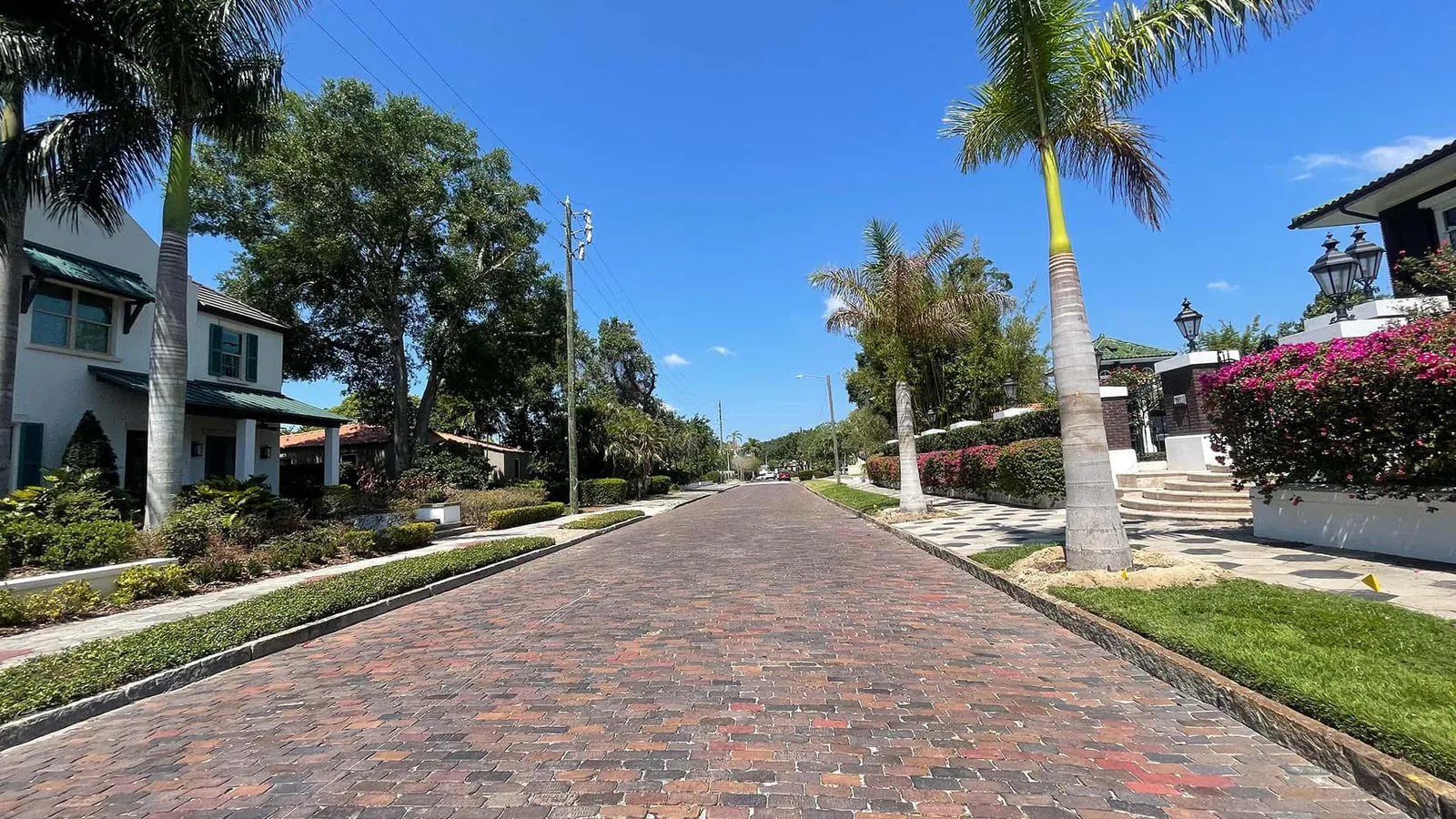
Into that business walked Taylor, with the best version of the pitch anyone had tried yet. He didn't just sell lots. He sold a finished daydream: an aristocratic resort town on the Gulf, with brick-paved streets, wide boulevards, a golf course, ornate stone gateways, and block after block of Spanish-style houses under red tile roofs. He called it Pasadena-on-the-Gulf. And a surprising amount of it he actually built.

To put a crown on it, he hired a Miami firm to design a hotel that was less a building than a stage set: a Spanish castle wrapped around a central plaza, with a tower copied from one that still stands on the river in Seville. He named it the Rolyat — his own name, Taylor, spelled backward. It opened on the first day of 1926 with champagne running in the fountain and Babe Ruth on the guest list.

Here's a wrinkle that tells you exactly who Taylor was. The hotel and the golf course sat just over the line, in the little neighboring town of Gulfport. In his advertisements, he put them in St. Petersburg anyway. The man was selling a mirage; a city limit wasn't going to slow him down.

Built to catch a breeze
Walk those Pasadena streets now and the houses are still standing — and if you know what you're looking at, every one of them is an argument with the heat. High ceilings, to let the hot air climb away from you. Deep shaded porches. Tall windows lined up directly across from each other, so a breeze off the Gulf could blow straight through the house and out the far side. The rooms were arranged around moving air, because moving air was the only cooling there was.

That was the state of the art for being comfortable in Florida, and it had been for everybody, forever. The native people who lived on this coast first had built open-sided shelters for the same reason. You read the wind, you threw the house open, you planted a shade tree, and in the worst of the summer you waited for the evening and the breeze that comes up off the water. A deep porch was the closest thing to air conditioning that money could buy. And it only really worked in the exact season Taylor was already selling.
A whole town got built on selling cool air nobody could yet make — which is why it only sold in winter, and only to people who could pack up and leave before the heat came.
Then the mirage ran out of water
It didn't last. The Florida land boom was a bubble, and in 1926 it burst — hurricanes, spooked banks, buyers who finally came to look at the lot they'd bought sight unseen. Four years after Taylor arrived, Pasadena-on-the-Gulf was bankrupt. And Handsome Jack did the one thing fully in character: around 1927 he simply vanished, leaving a pile of debts and a Spanish castle that nobody could keep full.

The glamour didn't save it. The golf champion Walter Hagen had been tied to the development's country club; Babe Ruth later signed a Yankees contract in the hotel lounge. None of it mattered. The Rolyat limped along, closed in 1932, and was turned into a boys' military academy. Decades after that it became a law school — Stetson's — which is the rare ending where a con man's fake castle grows up to teach people the rules.
Relief came in a box
And then, quietly, the thing the whole city had been built to sell stopped being something you had to travel for.

Sometime after the next war, cool air climbed down out of the sky and into a box you could bolt into your own window. Then into a system behind the wall. It did the one thing the Gulf breeze and the deep porch and the whole Sunshine City could never quite promise: it beat the heat on the worst day of the year, at two in the afternoon in July, in your own bedroom, with no train ticket and no season to wait out.
Think about what that did to Taylor's entire business model. He'd sold winter, because winter was the only version of Florida comfort that existed. Air conditioning quietly put summer up for sale too — except you didn't rent it by the season from a resort. You owned it, in the wall, for about the price of the light bill. The off-season ended. The thing nobody could make became the thing every house just has.
What's still standing
The brick streets are still here. So are the Spanish houses and the tile roofs and the stone gateways with the old development's name still cut into them. The Rolyat's tower still rises over the trees, copied from Seville, teaching law students now instead of pouring champagne.

But the houses do their job a different way now. The tall windows that were built to pull a breeze clean through the place mostly stay shut, because behind them a vent is humming, doing on demand what the whole glittering scheme could only promise for a few months a year.

So go back to Handsome Jack, counting out somebody else's money to sell a city's sunshine. He sold a lot of things that weren't real. But he was right about the one thing underneath all of it — that in Florida, being comfortable is the whole game, the thing people will pay nearly anything to get. He just couldn't make it. He could only point at the sky and promise it. The machine that finally kept that promise is the one nobody crosses the street to admire: the one behind the wall, that makes the cool instead of chasing it.