Historic Old Northeast · St. Petersburg, Florida  ·  A Local History

The Neighborhood That Was Built to Breathe


A hundred years ago, in one of the hottest corners of Florida, people built their houses to beat the summer — tall porches, sleeping porches, whole rooms set to catch the bay breeze. Then a machine in the window made all of it optional. In St. Petersburg's Old Northeast, you can still walk past the proof.

Walk the brick streets of St. Petersburg's Old Northeast on a July afternoon and look up at the porches. Not the wide front ones with the rocking chairs — the smaller ones tucked onto the second floor, screened on three sides, half-hidden behind an oak. A lot of those were bedrooms. People slept out there, outside, on purpose, in the dead heat of a Florida summer, because it was the coolest spot in the house.

A hundred years ago that wasn't eccentric. It was the plan. For almost all of this neighborhood's life nobody could buy cool air at any price — you could only build for it, chase it, sleep where it was. And the houses here were shaped, room by room, around that one problem.
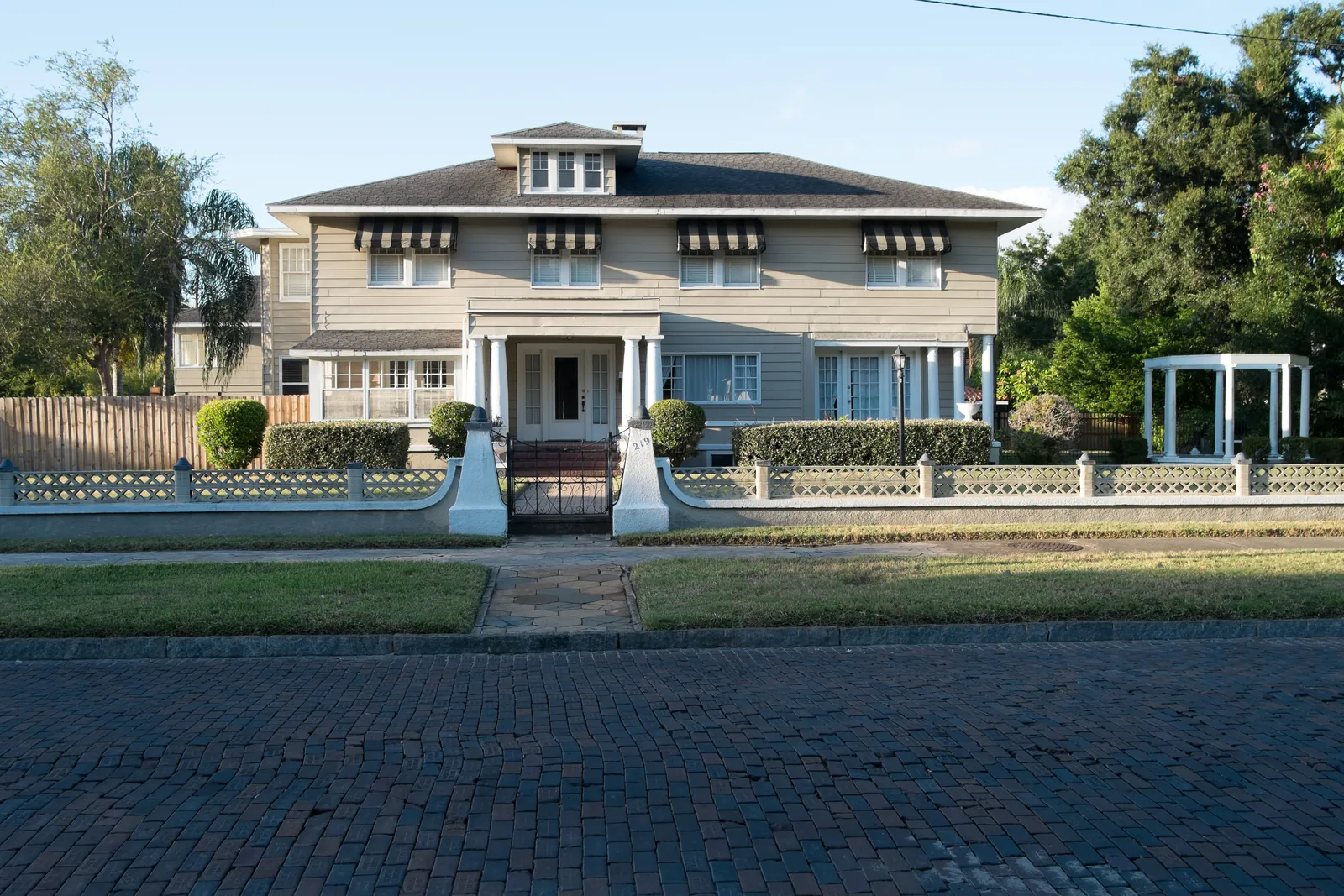
A two-story early-1900s home with a deep front porch and white picket fence on a brick street in the Historic Old Northeast, St. Petersburg, present day.
The Old Northeast today — still shaded, still built to breathe
A brick street in the Historic Old Northeast (present-day photograph). The deep porch, the tall windows and the oak canopy were all once part of how a house stayed cool. Photo: pasa47 (CC BY 2.0), via Wikimedia Commons.

So before we get to the houses, picture the thing they were up against.

The city that sold its own weather

St. Petersburg figured out early that its best product was the sky. By the 1910s it was calling itself the Sunshine City, and the local paper backed the brag with its own wallet: the Evening Independent promised that on any day the sun didn't come out by late afternoon, it would hand that day's paper to the whole town at no charge.

Here's the part that tells you about the place. The paper kept that promise for seventy-six years — and in all that time it only had to give the issue away a few hundred days. The sun almost always showed up.

A colorized postcard of Central Avenue in St. Petersburg around 1910, lined with tall palms, with an early automobile and two men walking in the shade.
Central Avenue, around 1910 — shade was the technology
“Central Avenue, Looking West, St. Petersburg” (postcard, circa 1910). Public domain, via Wikimedia Commons.

But sunshine cuts both ways in Florida, and everybody who actually lived here knew the other half of the deal. From about June to September the place turns hot and swampy, the kind of heat that sits down on top of you and stays. The sun that filled the hotels in January was the same sun that made August something you got through.

So the whole town arranged itself to get out from under it. People lived on porches and sidewalks and benches — downtown St. Pete was famously lined with thousands of green benches, and you sat on them in the open because open air that was moving beat a closed room every time.

A black-and-white photograph of people in hats sitting on rows of benches in front of a market in St. Petersburg in the mid-twentieth century.
The green benches — life was lived where the air moved
Green benches in St. Petersburg (photograph, circa 1940s–1950s). The city put thousands of them along its sidewalks; the open air was the cooling. Photo: simpleinsomnia (CC BY 2.0), via Wikimedia Commons.

And the water helped. The Old Northeast runs right down to the edge of Tampa Bay, and in the evening the breeze comes up off it. For a long stretch of this city's life, that breeze, a deep porch and a big shade tree were the best cooling anyone had.

A 1910 black-and-white view of the St. Petersburg waterfront, with a long wooden pier, a streetcar, small boats and the open water of Tampa Bay.
The waterfront, 1910 — the bay breeze did the work
The St. Petersburg waterfront and Electric Pier (1910). The neighborhood that grew up just north of here was built to reach for this water and the evening air that came off it. Public domain, via Wikimedia Commons.

A grid of brick and oak

The neighborhood itself got started around 1911, when a pair of developers named Snell and Hamlett began laying out the city's first real subdivision on the high ground above the bay. They did it with some care. The streets went down in brick, edged with granite curbs; the sidewalks were poured in little hexagon blocks you can still catch a toe on today. They planted oaks. A century on, those oaks are enormous, and they do something no air conditioner does — they drop the whole street a few degrees just by standing there.

A stucco Mediterranean-style home behind a low wall in the Old Northeast, with a hexagon-block concrete sidewalk running past it, present day.
Hexagon-block walks and deep shade, still here
A home and the signature hexagon-block sidewalk (present-day photograph). Brick streets, granite curbs and hexagon walks still define the district. Photo: pasa47 (CC BY 2.0), via Wikimedia Commons.

Then the 1920s land boom hit Florida and the Old Northeast filled in fast. The Gandy Bridge opened in 1924 and pulled the Tampa side of the bay an hour closer. The grand Vinoy hotel rose on the waterfront in the middle of the decade. Lots sold, houses went up, and they went up in the styles of the moment — low Craftsman bungalows with deep porches, and stucco Mediterranean Revival homes with thick walls and shaded arcades, the kind you'll find a few blocks over in Granada Terrace.

A 1926 black-and-white photograph of the large Vinoy Park Hotel on the St. Petersburg waterfront, with a wide street and an early automobile in front.
The Vinoy, 1926 — the boom that filled the streets
The Vinoy Park Hotel (January 1926). The waterfront landmark went up as the 1920s boom packed the Old Northeast with new homes. Florida Memory; public domain, via Wikimedia Commons.

Houses built to breathe

And this is the thing you can still read right off the houses if you slow down and look: nearly every choice in them was about moving air.

The ceilings are high, because heat rises and a tall room lets it climb away from you. The windows are big and they come in pairs on opposite walls, so a breeze can come in one side and go out the other instead of dying in the middle of the room. Transom windows sit above the doors to let hot air slip from room to room even with the doors shut. The porches are deep enough to keep the sun off the walls entirely. A lot of the houses sit turned toward the bay, reaching for that evening breeze on purpose.

A green Craftsman bungalow in the Old Northeast with a wide, deep front porch under a low overhanging roof, shaded by trees, present day.
A bungalow porch, built to shade the whole front wall
A Craftsman bungalow in the North Shore Historic District (present-day photograph). The deep porch and low, wide eaves kept the Florida sun off the house itself. Photo: Ebyabe (CC BY-SA 3.0), via Wikimedia Commons.

And then there were the sleeping porches. Up on the second floor, screened and open to the night, they were exactly what they sound like: porches you slept on. When the house was still holding the day's heat long after dark, the coolest bed in the place was the one out in the moving air, and whole families used them.

A 1917 photograph of an open-air sleeping porch, with simple metal beds made up under screened openings looking out into trees.
A sleeping porch, 1917 — beds out in the night air
An open-air sleeping porch (from a 1917 publication) — a period example of the idea, not a St. Petersburg house. Across the hot South, beds moved onto screened porches at night. Public domain, via Wikimedia Commons.

There was a health fashion wrapped around it too. Doctors of the day swore by night air — they believed sleeping outside warded off everything from weak lungs to tuberculosis — so the sleeping porch got to be both the cool spot and the wholesome one. Either way the point was the same. The house was a machine for catching a breeze, and you lived by where the breeze was.

Every house on these streets was built around one job — catching cool air a person couldn't make — and the whole family's day bent to follow it.

The cool came in a box

Then, in the years after the war, the whole arrangement quietly came apart — not from a storm or a bust, but from a small machine you could set in a window.

By the 1950s room air conditioners were landing in ordinary Florida houses, and cool air stopped being something you designed a house to catch and became something you bought and switched on. You can watch it happen in how towns talked about themselves: St. Pete had sold the Sunshine City, and down the coast Sarasota started printing postcards bragging that it was the Air Conditioned City. Cool had turned into a product any place could put on a sign.

A colorful mid-century large-letter postcard reading 'Greetings from Sarasota Florida, The Air Conditioned City', with scenes set inside the big letters.
The new pitch any town could make — cool, for sale
“Greetings from Sarasota, Florida — The Air Conditioned City” (large-letter postcard, Tichnor Brothers, circa 1945). A Florida example of the era: once cool came in a box, a town could brag about it the way St. Pete had bragged about the sun. Via Wikimedia Commons.

What that did to a neighborhood of breathing houses was strange and gentle. Nobody tore them down. People just stopped needing the tricks. The sleeping porches got glassed in and turned into little studies and “Florida rooms.” The big paired windows got shut so the cold air wouldn't leak out. The deep porch became a nice spot for a chair instead of the main cooling system. The houses still knew how to breathe; their owners simply stopped asking them to.

What the houses still know

The Old Northeast came through all of it nearly whole. It's now one of the largest historic districts in Florida, added to the National Register in 2003 — block after block of those same bungalows and stucco houses, down brick streets under oaks bigger than ever.

A white two-story Mediterranean Revival home in the Old Northeast with arched windows, a barrel-tile roof and thick stucco walls, present day.
Thick walls, deep shade — a house that beats the sun
A Mediterranean Revival home in the district (present-day photograph). Thick masonry walls and shaded openings were another way to hold the heat at the door. Photo: Ebyabe (CC BY-SA 3.0), via Wikimedia Commons.

Walk it today and you're reading a hundred-year-old set of instructions for staying cool without electricity: face the water, dig a deep porch, raise the ceilings, line up the windows, plant the oak, sleep where the air moves. Every one of those moves was somebody's answer to a Florida summer, back when the summer got the last word.

A tall stucco home behind palms on a quiet brick street corner in the Old Northeast, St. Petersburg, present day.
Still standing, still in the shade
A quiet brick corner in the Old Northeast (present-day photograph). Photo: pasa47 (CC BY 2.0), via Wikimedia Commons.

So go back to that second-floor sleeping porch from the start, the one screened against the dark. Nobody sleeps out there now. The family inside is cool tonight, in August, in Florida — but the cool is coming from a vent, humming quiet somewhere behind the wall, doing on demand the exact job the whole house was once shaped to do by hand. The porch is a pretty room with good windows now, and the job it used to do is still getting done — just by the machine behind the wall instead of the breeze off the bay.

A present-day note · I Know A Guy AC

The Old Northeast spent a hundred years out-thinking the heat. Your AC just does it for you.

Those old houses are clever, and they were never quite enough. A deep porch, a bay breeze and a bed on the sleeping porch got people through a Florida summer — barely, and only on the nights the air agreed to move. The window unit beat all of it the moment it arrived, for one plain reason: it works on the still, soaking August night when the breeze doesn't come at all.

Keeping a St. Petersburg house cool is still the whole job — we just do it with real equipment now instead of oak trees and open windows, sized and set up for your house so the heat outside stays a thing you only notice when you step into it. The machine that replaced the sleeping porch is quiet, and it's easy to forget it's even there, right up until the afternoon it quits.

And when it does — on the hottest day, because that's the day it picks — you've got an easier move than any of those first families reaching for the breeze ever had. You don't have to chase the shade or wait on the wind off the bay. You make one call, because for keeping an Old Northeast home cool the modern way… we know a guy.

See what a new system costs→
Sources & Photo Credits

On the history

Photographs

  1. Brick street and home, Historic Old Northeast (present day, HERO) — photograph by pasa47 (CC BY 2.0), via Wikimedia Commons. File: old-northeast-brick-street-home-today.
  2. “Central Avenue, Looking West, St. Petersburg” (postcard, circa 1910) — public domain, via Wikimedia Commons. File: central-avenue-c1910.
  3. Green benches, St. Petersburg (photograph, circa 1940s–1950s) — simpleinsomnia (CC BY 2.0), via Wikimedia Commons. File: green-benches-c1950.
  4. St. Petersburg waterfront and Electric Pier (1910) — public domain, via Wikimedia Commons. File: waterfront-electric-pier-1910.
  5. Home and hexagon-block sidewalk, Old Northeast (present day) — photograph by pasa47 (CC BY 2.0), via Wikimedia Commons. File: hexagon-sidewalk-home-today.
  6. Vinoy Park Hotel (January 1926) — Florida Memory / State Archives of Florida; public domain, via Wikimedia Commons. File: vinoy-hotel-1926.
  7. Craftsman bungalow, North Shore Historic District (present day) — photograph by Ebyabe (CC BY-SA 3.0), via Wikimedia Commons. File: craftsman-bungalow-porch-today.
  8. Open-air sleeping porch (from a 1917 publication; a period example of the type, not a St. Petersburg house) — public domain, via Wikimedia Commons. File: open-air-sleeping-porch-1917.
  9. “Greetings from Sarasota, Florida — The Air Conditioned City” (large-letter postcard, Tichnor Brothers, circa 1945; a neighboring-city example, labeled as such) — via Wikimedia Commons (Steven R. Shook, CC BY 2.0). File: air-conditioned-city-postcard-c1945.
  10. Mediterranean Revival home, North Shore Historic District (present day) — photograph by Ebyabe (CC BY-SA 3.0), via Wikimedia Commons. File: mediterranean-revival-home-today.
  11. Brick street corner, Historic Old Northeast (present day) — photograph by pasa47 (CC BY 2.0), via Wikimedia Commons. File: old-northeast-street-today.

Present-day photographs are identified as modern; period images carry their circa dates. The Sarasota postcard and the 1917 sleeping-porch photograph are labeled as out-of-town / period examples where no equivalent Old Northeast image was available. Original downloads and a full research record are kept alongside this page in assets/images/originals/ and source-record.md. No image's factual content was altered; the print frames and handwritten notes are CSS added around the photographs, never onto them. Any owner who would like an image removed need only ask.