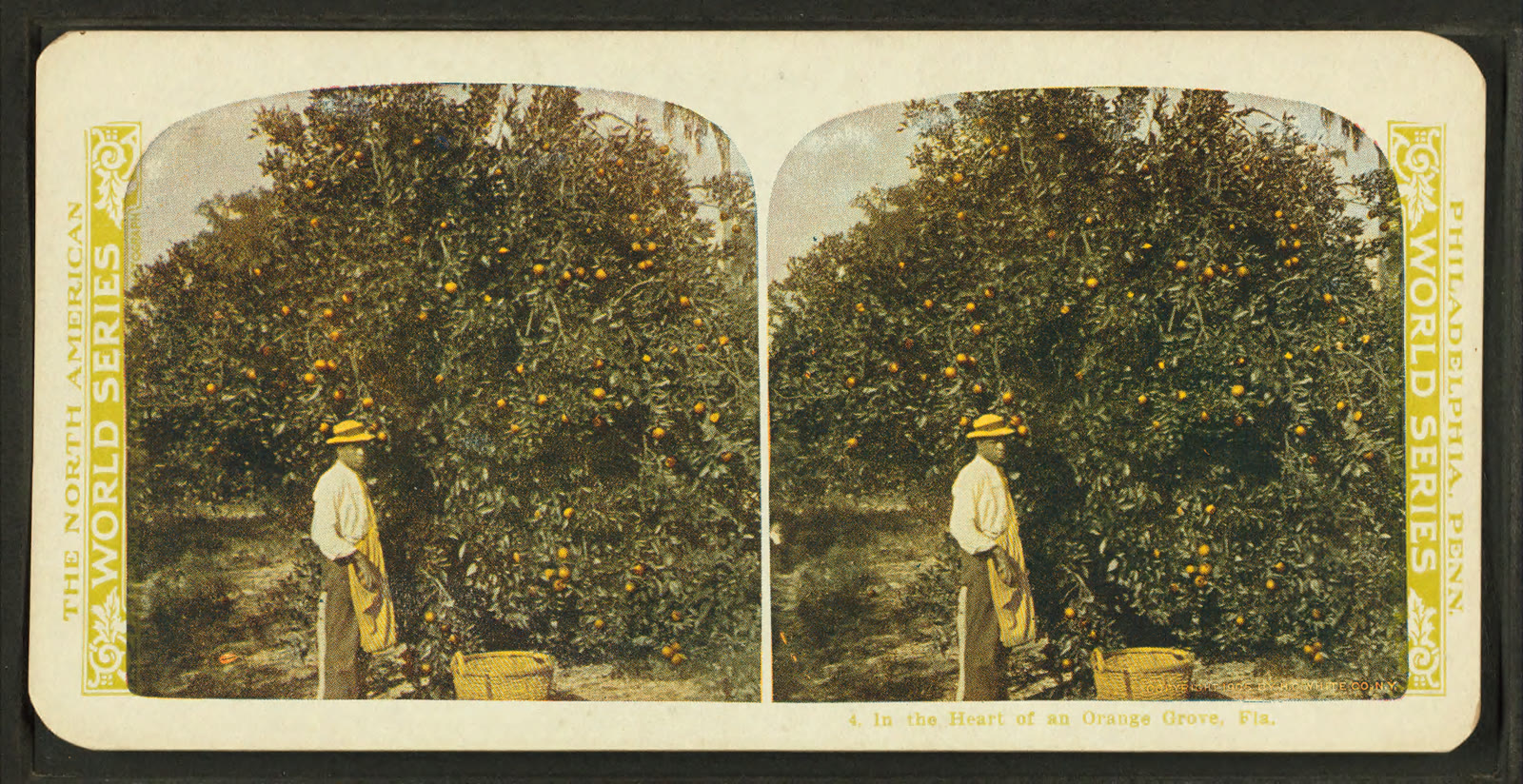
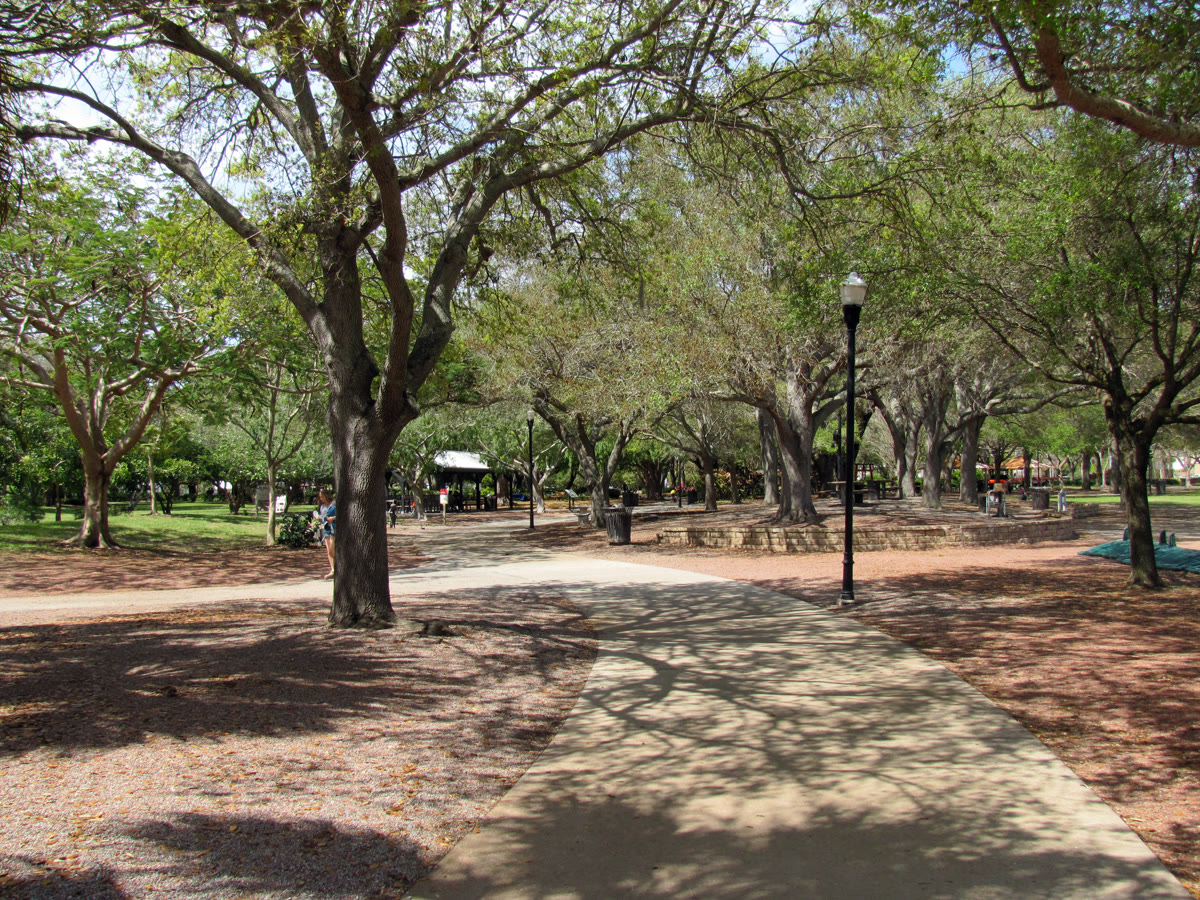
Stand in the middle of Largo Central Park on a bright Saturday — the big fountain going, kids on the splash pad, traffic on all four sides — and you are standing on the floor of a vanished citrus packing plant. Right here, oranges and grapefruit once came in from the groves by the wagonload, were graded and wrapped and nailed into pine crates, and left on a train headed north. The fruit that crossed this ground was worth so much that the men who grew it did something almost no American town has ever pulled off: they cut themselves a brand-new county to carry it.
The town is Largo, and for the better part of a century it answered to a prouder name — Citrus City. Today the county those growers created, Pinellas, has fewer than forty acres of citrus left in the whole of it. This is the story of how an orange drew a line on the map of Florida, and how the line outlived the orange.
01 — before the fruitA peninsula almost nobody wanted
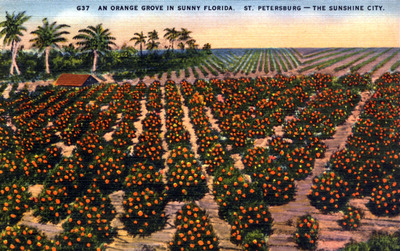
For a long time there was barely a town here to speak of. The lower half of the peninsula between Tampa Bay and the Gulf was pine flatwoods and palmetto scrub, settled slowly by families who came for cheap land and stayed for the fishing. The McMullens homesteaded near here around 1852, ran cattle, put in a few citrus trees, and grew vegetables — the way you provisioned a family, not the way you built a fortune. The oranges were good. They just had nowhere to go.
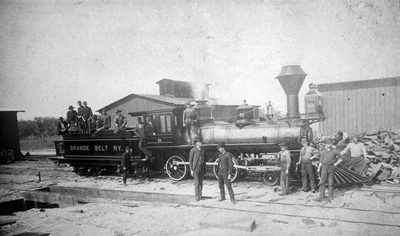
That changed in 1888, when the Orange Belt Railway finally reached the settlement and, in passing, gave it a name: Largo. A rail line meant a Florida orange picked in December could be in a northern grocery in January, back when a fresh orange in a northern winter was close to a small miracle. Overnight, the fruit that had only ever fed the family was worth money — real money — to anyone who could get enough of it onto a train.
02 — the grower who organized itOne man, and a town of packing houses
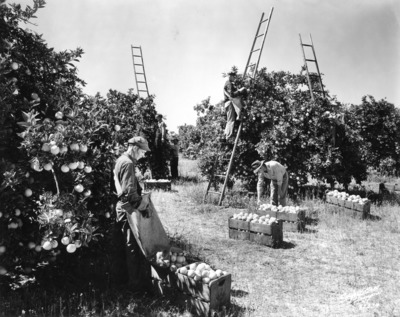
The man who understood that fastest was John Stansel Taylor. He'd been born near Largo in 1871, grew up in the groves, and in 1902 built his first citrus packing house — a shed where the loose fruit of a dozen small growers could be washed, sized, wrapped and boxed to a single standard a northern buyer would trust. Then he talked his neighbors into doing the same, together. By 1910 Taylor had his hand in four large packing houses and around ten smaller ones.
Consider the scale of the thing against the size of the place. In 1910 Largo had exactly 291 residents. Two hundred and ninety-one people — and enough citrus moving through their sheds to make the town a genuine shipping center for the whole lower peninsula. The groves ran to the horizon; the town was a rounding error. Almost everything about Largo, including the trouble it was about to cause, came out of that ratio.
03 — the road that wasn't thereSo they built their own county
Here was the problem, and it had nothing to do with the fruit. Largo sat at the bottom of a long peninsula that belonged, on paper, to Hillsborough County — whose seat was Tampa, across the bay. Getting there meant an overnight trip. The roads were sand and muck that swallowed a motorcar whole after a rain. The peninsula's tax dollars flowed east to Tampa, and precious little seemed to come back.
When Hillsborough did spend money out here, it landed badly: a single graded shell road, and a bridge over Long Bayou that, by one account, collapsed almost the moment it was finished and was never rebuilt. For men whose entire livelihood depended on getting perishable fruit onto a train on schedule, a county government that could not — or would not — build them a decent road was not an annoyance. It was a threat.
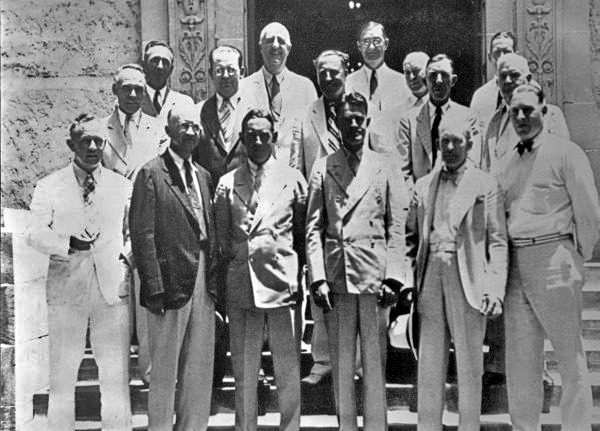
So John Taylor took the argument to the statehouse. Sitting as one of Hillsborough's representatives from 1905, he spent five years making the case that the peninsula should govern itself. In 1911 the legislature agreed to let the people decide, and that November the peninsula voted to leave — nearly two to one. On the first day of 1912, Pinellas came into being as Florida's forty-eighth county. Largo's citrus grower was promptly elected its first state senator.
The fruit was worth so much that the men who grew it redrew the map of Florida to get it to market.
04 — Citrus CityThe best years, boxed and shipped
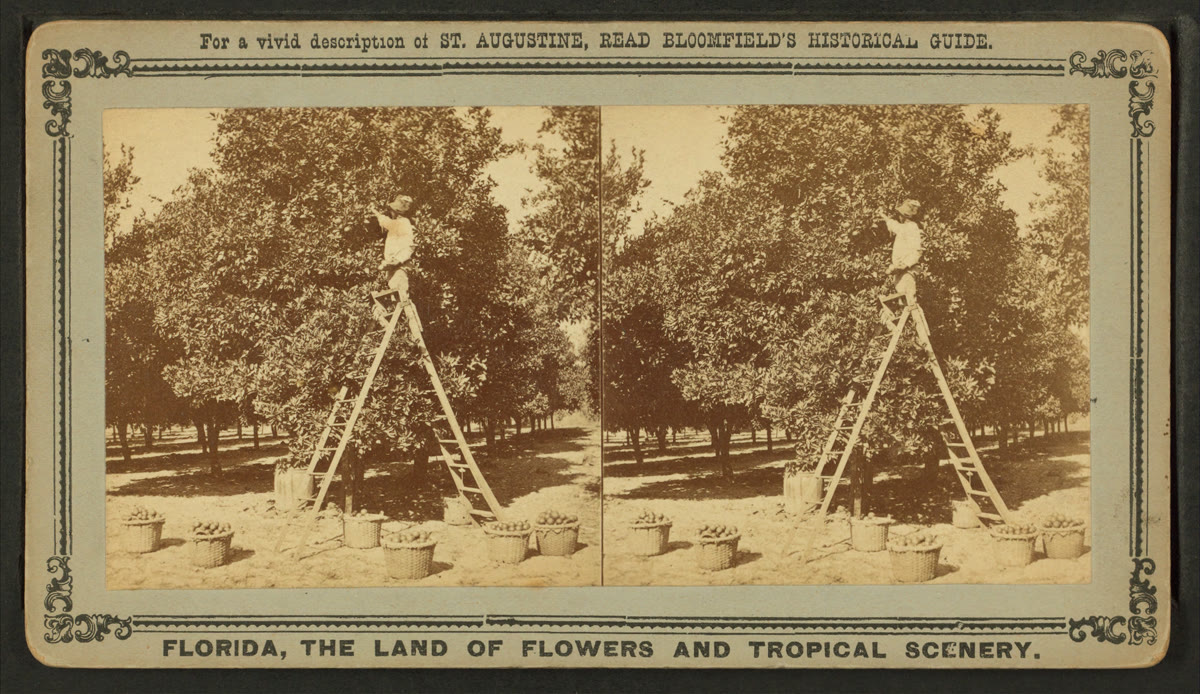
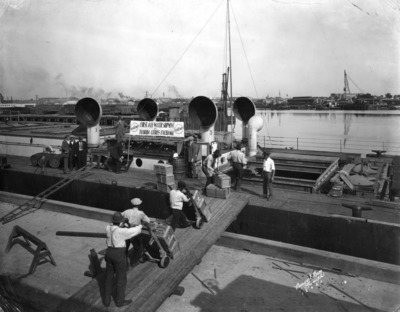
The 1920s were the top of it. The growers pooled their name and their muscle into the Citrus City Growers Association in 1921, and the sheds around town crated oranges and grapefruit by the boxcar for the markets up north. Every box that left carried a bright paper label — a painted Florida of impossible sunsets and heavy fruit — pasted to the end of a plain pine crate, advertising a place most of the buyers would never see.
Taylor rose right along with the fruit. He was president of the Florida Senate by 1925, ran for governor in 1928, and later led the Florida Citrus Exchange — the grower from the 291-person town, speaking for the whole state's crop. The county he'd carved out to move his oranges had made him one of the most powerful men in Florida.
05 — the turnWhat the freezes started, the bulldozers finished
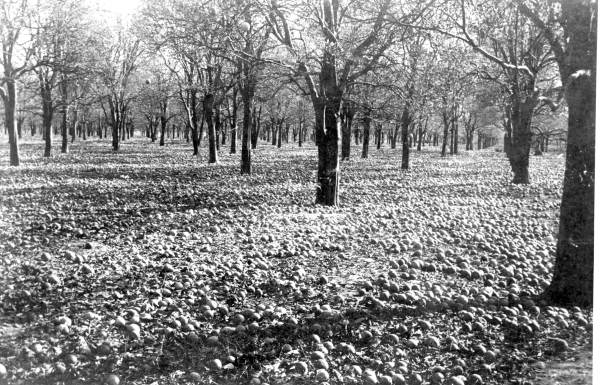
What undid it was partly the weather and mostly arithmetic. Hard freezes kept working their way down the peninsula and burning the groves black overnight; disease and storms took their turns too. In 1929 a fire even took Taylor's original 1902 packing house, though they simply built a bigger plant to replace it. Taylor died in Largo in 1936, still the town's most famous son, in the county he'd built.
But the thing no freeze could match was people. After the Second World War, Florida filled up — and a cleared, flat, well-drained orange grove near the Gulf is precisely the parcel a subdivision developer dreams about. Grove by grove, the trees came out and the ranch houses went in. You can read the whole reversal in one column of numbers: Largo had 291 people in 1910, 5,302 by 1960, and 58,977 by 1980. In a single generation, Citrus City stopped being a citrus town and became a suburb.
06 — what stayedThe county outlived the orange
By the 1980s citrus was no longer king anywhere in Pinellas. The last real grove in Largo — Margueritte Thurston's thirty-seven acres — was sold off for development after she died in 1998. By 2002, the entire county that oranges had built held fewer than forty acres of citrus. A county drawn around a fruit had very nearly run out of the fruit.
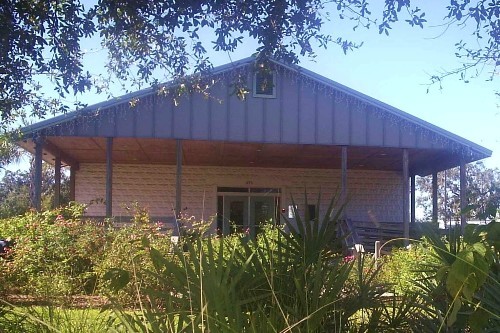
And yet it's still here if you know where to look. The old Largo Feed Store, where grove families once bought their seed and fertilizer, still stands and is now the town's little history museum. A single holdout grove — Yellow Banks, planted in 1951 — still sells fruit from a storefront on Walsingham Road. And the packing plant where the whole thing shipped from? Its floor is under Largo Central Park now, beneath the fountain and the splash pad and the traffic on all four sides.
So the line an orange drew is still right there on the map — a whole county, three-quarters of a million people, named and shaped by a crop you can now drive all day and never pass. Largo is still Citrus City on the old letterhead. The city is still standing. The county is still there.
It's only the oranges that packed up and left, one subdivision at a time.